
Construction Marketing That Fits a Small Crew
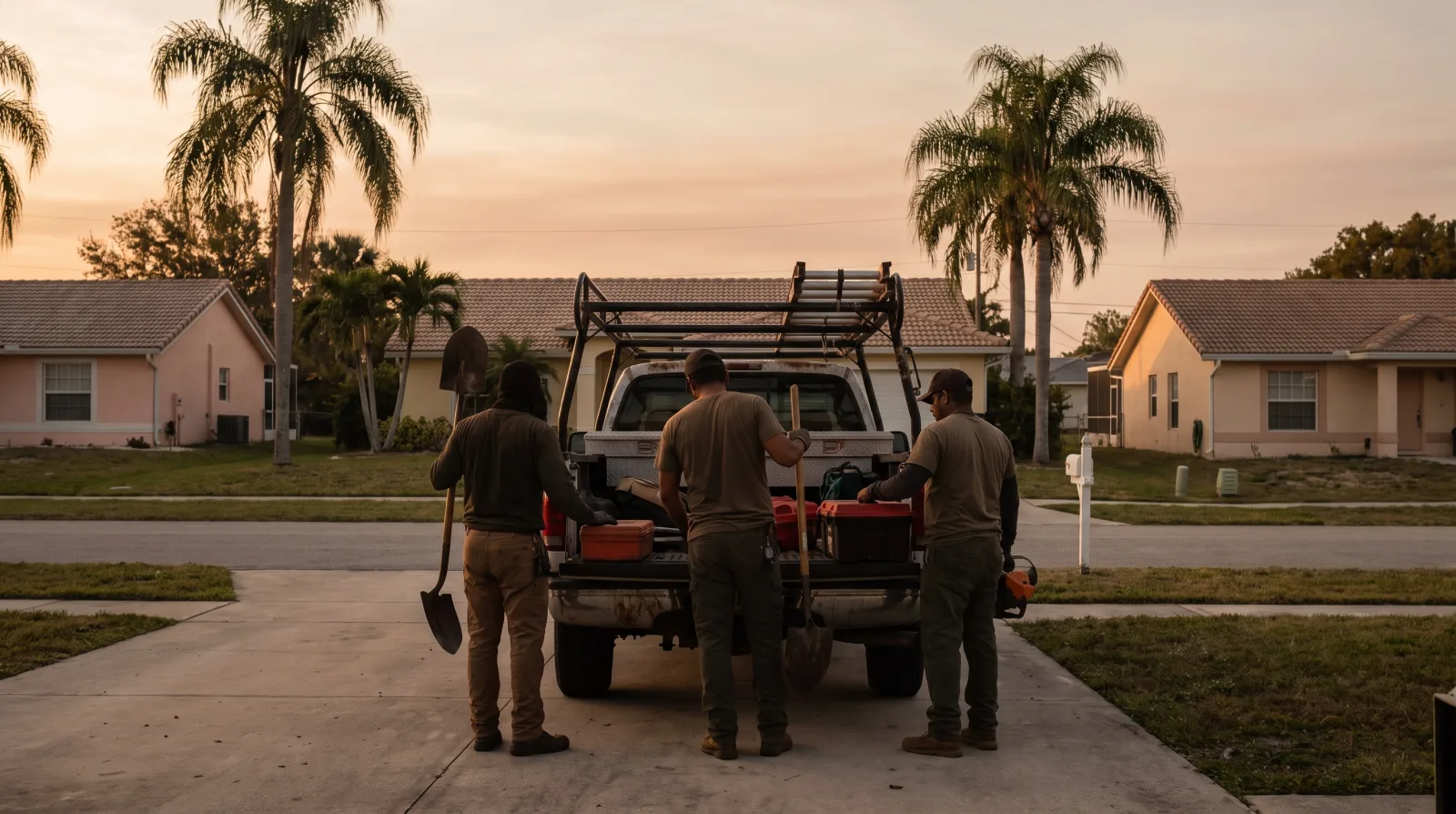
Most construction marketing advice is written for companies with a marketing department. It assumes someone owns the content calendar, someone else runs the ads, and there's a budget to test with. If it's you, a crew of three, and a truck, the winning approach is a short list done consistently — because the constraint isn't strategy, it's who has time to execute it on a Thursday.
Here's the list, in the order that pays.
1. Answer the phone, or text back automatically
This is first because it's the cheapest and it recovers work you've already paid for.
A homeowner calling contractors is usually calling several. The first real response frequently wins, regardless of price. Not the best bid — the first human contact.
You're on a roof. You can't answer. That's the job, not a flaw. Missed-call text-back handles it: the call comes in, you can't take it, and an automatic text goes out within seconds saying you'll be right with them. The lead stays warm long enough for you to climb down.
Every other item on this list costs money or time. This one mostly stops losses.
2. Finish your Google Business Profile
Free, and most of your competitors have done it halfway.
Primary category is the heaviest lever — it decides which searches you appear for at all. Pick the one that matches what you actually want to sell, not the broadest one available.
Services — fill in every one. Blank on most profiles.
Service area — set it to where you'll actually drive, not where you wish you worked.
Photos — real finished jobs, added regularly. Not stock. Not a logo. This is genuinely the difference between profiles that look active and profiles that look abandoned.
Hours — accurate, including whether you're open Saturday.
An afternoon of this outperforms a month of most paid campaigns at small scale.
3. Ask for reviews, every job, forever
The highest-return habit in the entire trade, and the hardest to keep up.
Review count and recency drive both map pack ranking and whether a homeowner picks you over the guy next to you in the results. It's also the input with the longest lead time — which is exactly why it should start before you need it.
The habit that works: ask on site, at the moment the customer is happiest, which is when they first see the finished work. Not by email next week. The crew is loading up, the job looks great, they're standing right there. That's the ask.
Make it easy — a short link or a QR code on the invoice. Every extra step costs you reviews.
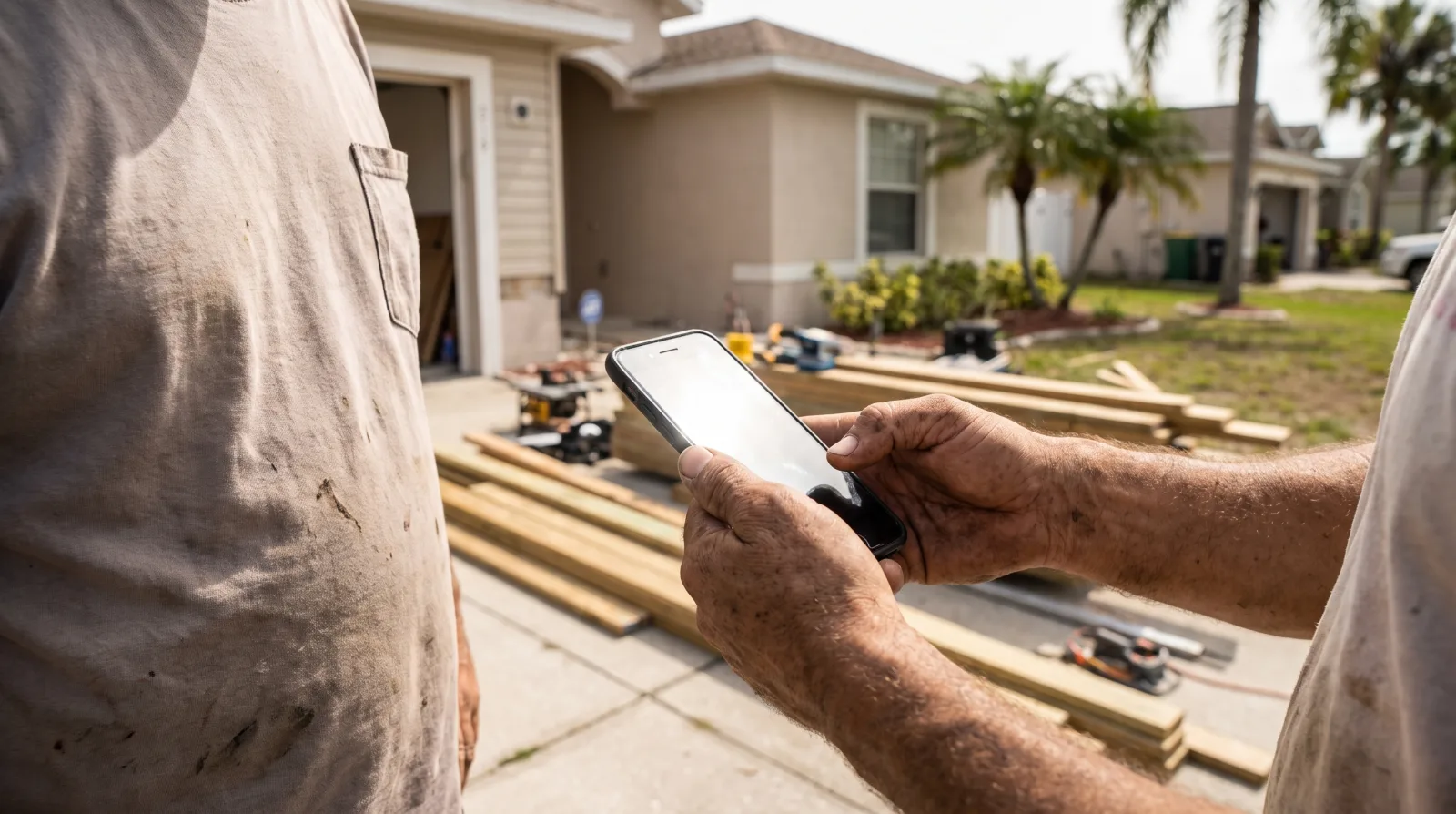 Answering fast is the one advantage a small crew has over a company routing calls through another state.
4. Build a small site that helps people decide
You don't need fifteen pages. You need:
- The work. Photos of finished jobs, in volume. This is the page people actually spend time on.
- A page per service you sell. Not per keyword — per service.
- Honest ranges. What things typically cost and how long they take. Most competitors won't say, which makes saying it an advantage.
- One obvious way to contact you, repeated down every page.
That's it. A five-page site that answers real questions beats a twenty-page site that talks about commitment to excellence.
5. Show the work in video
Construction sells something the customer can't see yet. They're buying a promise about a space that doesn't exist.
Short video is the most direct proof available. Not a produced commercial — a walkthrough. Ninety seconds through a finished job, or a time-lapse of a pour or an install. It shows scale and quality in a way stills can't, and it shows a crew that knows what it's doing.
Practical note: this footage does double duty. It works on the site, on the Google Business Profile, and as social proof. One shoot on a job you're already doing feeds all three, which is what makes it viable for a small crew.
6. Then, and only then, buy traffic
Ads into a path that converts are an investment. Ads into a leaking path are a donation.
If calls go unanswered, the profile is half-built, and the site doesn't help anyone decide, paid traffic just costs more per job than it should. Fix 1 through 5 and the same budget goes further.
When you do buy: start local and narrow. A small budget covering your actual service area beats a bigger one spread across a metro you can't service profitably.
 Unglamorous, free, and worth more than most of what gets sold as marketing.
What to skip
- Directory link packages. They don't move local rankings.
- Blogging before the foundation. Content on a broken base doesn't compound.
- Chasing national keywords. You're not outranking manufacturers for generic terms. Local is where you win.
- A redesign as a strategy. A new look doesn't fix relevance, distance, or responsiveness.
- Anything on a monthly retainer before the free work is done. If someone's pitching a package and hasn't looked at your Google Business Profile, that's your answer.
Where small crews actually have an edge
You can't outspend a larger competitor. You can beat them on two things they're structurally bad at.
Speed. You can answer in two minutes. A company routing calls through an office in another state can't.
Specificity. You know which neighborhoods have HOA color restrictions, how the salt air near the coast affects materials, which permits move slowly in your county. Marketing that includes that detail reads as local and competent. It's also exactly what search engines and AI answers reward, because nobody else can write it.
Both are free. Both are advantages you already have and probably aren't using.
For the wider system this sits inside, see marketing for contractors. For the search side specifically, see contractor SEO.
— Creatively Grow, Tampa Bay, FL
Common questions
- How much should a small construction company spend on marketing?
- Often 3–8% of revenue, higher when actively growing. But sequence beats percentage at small scale: fix response time and your Google Business Profile before increasing spend, because those determine how much of any budget actually converts.
- What is the cheapest way to market a construction business?
- Your Google Business Profile and your reviews. Both are free, both are ranking factors, and both are neglected by most competitors. A complete profile with recent photos and steady reviews outperforms a small ad budget almost every time.
- Does social media work for construction companies?
- It works as proof, not as a lead source. Most people won't find you on Instagram, but many will check it after finding you elsewhere. A feed showing recent finished work reassures them the business is active. A dead feed does the opposite.
- Do I need a website if I have a Google Business Profile?
- Yes, but it can be small. The profile gets you found; the site is where someone decides. A handful of pages — the work, the services, proof, and one obvious way to contact you — beats a large site nobody finishes.
- How do I compete with bigger construction companies?
- Not on budget. Compete on responsiveness and specificity. You can answer the phone faster and describe local conditions in more detail than a company running marketing from another state. Both are ranking and conversion advantages.