
Google Guaranteed: Is It Worth It for a Local Contractor?

Google Guaranteed is the green checkmark that shows up above the map pack, on the ad unit Google calls Local Services Ads. It charges per lead instead of per click, puts you at the very top of the page, and adds a badge backed by a Google guarantee. For contractors with a real license, real insurance, and someone who answers the phone, it's often the fastest paid channel available. For everyone else it burns money quietly.
Here's how it actually works and where contractors lose on it.
What it is, exactly
Local Services Ads sit above the map pack and above traditional text ads — usually the first thing on the page. Each listing shows your business name, rating, review count, and the badge.
Three things make it different from Google Ads:
You pay per lead, not per click. A call or message that meets the criteria costs you money. Someone who taps and hangs up in two seconds generally doesn't.
The lead comes to you directly. There's no landing page in the middle. The phone rings.
You get screened first. License verification, insurance verification, and a background check on the business and often the owner. This is the part that filters out competitors — and the part that takes the longest.
The guarantee itself covers the customer, not you: if a customer is unhappy with work booked through the ad, Google may reimburse them up to an amount that varies by market. It's a trust signal aimed at the homeowner.
Who it's worth it for
It works when three things are true:
You're licensed and insurable. If you can't pass screening, this channel doesn't exist for you. Some trades aren't eligible at all — check your category first.
Your job value is high enough. Per-lead pricing only makes sense against your average ticket and close rate. Do the arithmetic before you switch it on: cost per lead ÷ close rate = cost per job. If that number is uncomfortable next to your margin, this isn't your channel. A screen enclosure company selling full pool cage rebuilds has very different math than one selling rescreens.
Someone answers the phone. This is the one that kills contractors. LSA ranking is influenced by responsiveness, and unanswered leads are wasted twice — you paid for it and it hurts your position. If calls go to voicemail during the workday, fix that before you turn this on.
 License and insurance verification is the gate. It's also what keeps the field smaller than it looks.
Where the money leaks
Nobody answers. Worth repeating because it's the most common failure. You're paying per lead for calls nobody picks up. Missed-call text-back is the cheap patch — an automatic text within seconds so the lead stays warm until you're off the ladder.
Never disputing bad leads. Out-of-area calls, wrong job types, spam, wrong numbers — all disputable for credit. Contractors who never dispute pay for junk every month. Build it into someone's Friday routine.
Service area set too wide. It's tempting to cover everything. But you'll buy leads two counties out that you'd never profitably drive to. Set the area to where you actually want to work.
Job types left switched on. If you don't want small repairs, turn those job types off. Otherwise you're paying for the work you took this channel to avoid.
Treating it as a strategy. LSA is rented demand. It works while you pay, and stops the day you stop. Contractors who build their whole pipeline on it have no business the month they pause. Use it to fill the calendar while you build channels you own.
Reviews matter here too
Your review count and rating affect LSA ranking, same as the map pack. Reviews collected through the LSA flow count toward the badge listing specifically.
This is the compounding part: reviews improve organic map pack position and paid LSA position at the same time. It's one of the few inputs that pays into both, which is why it's worth starting before you need it.
LSA and Google Ads together
They're different buys and they behave differently.
Local Services Ads are top of page, per lead, direct contact, minimal setup once screened. Great for urgent, ready-to-hire searches.
Google Ads are per click to a landing page, with far more control over keywords and messaging. Better for considered purchases where someone wants to see the work first — which describes most epoxy and screen enclosure jobs, where people browse finished galleries before calling.
For higher-consideration trades, the pattern that usually works is LSA for the ready-now searches and Google Ads pointed at a page that does the convincing. That page has to be genuinely good — finished work, honest ranges, an obvious way to make contact — or you're paying for clicks that bounce.
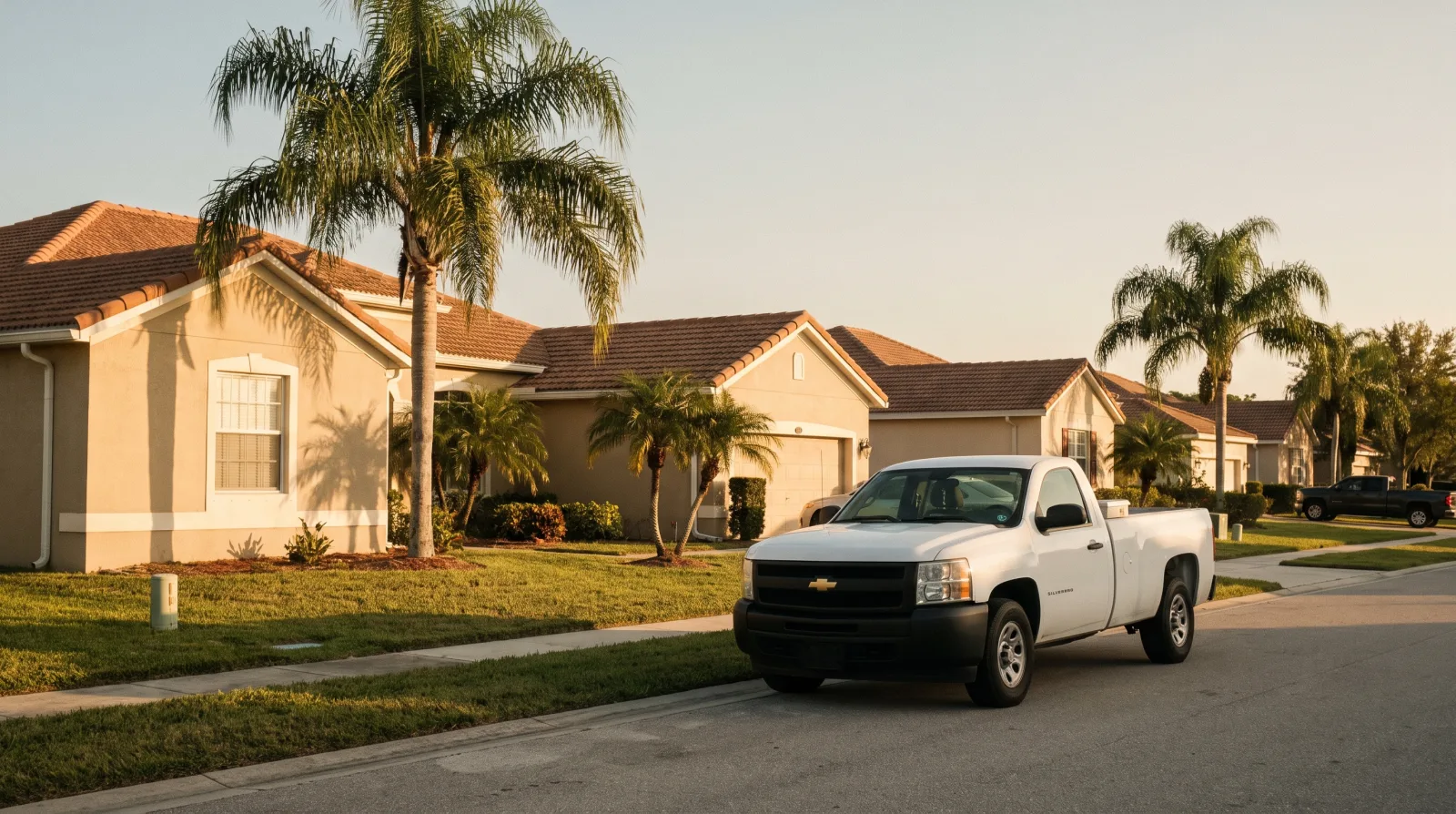 Set your service area to where you'll actually drive, not where you wish you worked.
How to decide
Run the arithmetic before you spend:
- Check eligibility for your category and state.
- Find the going per-lead rate for your trade and market — not a national average.
- Estimate your close rate on inbound calls, honestly.
- Divide to get cost per job. Compare to your margin.
- Fix answering first. If calls are getting missed today, this channel will amplify that into a monthly bill.
If the math clears and you answer the phone, LSA is usually the fastest way for a licensed contractor to get above the fold. If it doesn't clear, the money is better spent on the profile and service pages that keep working after you stop paying.
For the foundation this sits on top of, see contractor SEO and marketing for contractors.
— Creatively Grow, Tampa Bay, FL
Common questions
- What is the difference between Google Guaranteed and Google Ads?
- Google Ads charges per click and sends people to your website. Local Services Ads, which carry the Google Guaranteed badge, charge per lead and send a call or message straight to you. They appear in different places on the page and are bought and managed separately.
- How much does Google Guaranteed cost?
- There's a screening process plus a per-lead cost that varies widely by trade and market — trades with high job values run considerably more per lead than lower-ticket work. You set a weekly budget. Check current rates for your category and area rather than trusting any published number, including this one.
- Can you dispute a bad lead?
- Yes. Leads outside your service area, outside your job types, spam, or wrong numbers can be disputed for credit. Do it consistently — contractors who never dispute quietly pay for junk every month. It takes a couple of minutes per lead.
- Do I need a license and insurance to get the badge?
- For most eligible trades, yes — license and insurance verification plus a background check on the business and often its owner. Requirements vary by category and state. Screening takes time, so start early if you want to be live for a season.
- Does Google Guaranteed help my regular rankings?
- No. It's paid placement and doesn't improve your organic or map pack position. It buys visibility above them. If you stop paying, it disappears, which is why it works best alongside owned channels rather than instead of them.