
Home service marketing works when every channel leads to the same next step
Home service marketing works when every channel leads to the same next step
Home service marketing works when local search, your website, reviews, and follow-up all move a homeowner toward one clear next step. Stop treating each channel as a separate campaign. Build a path that makes it easy to understand the job, trust your crew, make contact, and hear back.
Most home service companies do not have a traffic problem first. They have a handoff problem.
A homeowner finds a Google listing. The listing sends them to a generic homepage. The homepage has a phone number, a stock slogan, and a list of everything the company has ever done. They call after hours and get voicemail. Or they fill out a form that lands in an inbox nobody watches until the next day. The money and effort that got the homeowner there are wasted in the gaps.
That is why home service marketing should be one connected customer path, not five channels with five owners and five reports. The path is simple: get found, make the job understandable, prove that you are a safe choice, make contact easy, and respond while the homeowner still cares.
Start with the job the homeowner is trying to hire for
“Home services” is a useful business category and a terrible way to talk to a customer. Nobody wakes up wanting home service marketing. They want a garage floor that is not stained and dusty. They want a pool cage repaired before bugs, weather, and debris make the patio unusable. They want a working AC unit, a plumber who answers, or an electrician who can explain what is wrong.
Your marketing has to begin at that level.
Give each meaningful service a page or section that says what the work is, who it is for, what happens during the process, and how the customer starts. An epoxy flooring company should not bury garage floor coatings beneath a broad “residential services” menu. A screen-enclosure company should not make a homeowner hunt through a gallery to learn whether it handles rescreens, repairs, or a new pool cage.
This does not mean creating a thin page for every phrase you can imagine. It means matching the information to real buying questions. A page for an epoxy garage floor can explain surface preparation, coating options, the work area, and what the homeowner needs to do before the crew arrives. A page for a pool cage can distinguish repair work from a replacement enclosure and explain what an estimate visit covers.
That specificity helps the homeowner and the search engine at the same time.
Let local search send people to the right place
Your Google Business Profile, service pages, review profile, and location signals need to agree with each other. If your listing says you serve a territory, your site should make the same service area clear. If the listing emphasizes one service but the site barely mentions it, the click has nowhere useful to go.
Local search is not a magic switch you flip by adding city names to every heading. It is a trust and relevance problem. Google needs a clear picture of what you do and where you do it. A homeowner needs the same picture without reading a dissertation.
Keep the basics accurate: company name, contact details, hours, service categories, service areas, and the link to the appropriate page. Add real job photography when you have permission, keep updates current, and respond to questions and reviews. Do not create a separate business listing for every suburb or service unless there is a real customer-facing location. Google's guidelines don't allow it, and it creates a mess you later have to defend.
For a fuller look at the site and search side, read Contractor SEO: The Parts That Actually Move the Phone. The goal is a local presence that is useful when someone is actively comparing options, not a checklist of every SEO task.
A brand story is proof when it answers the homeowner’s doubts
A polished video or a clever logo cannot rescue a weak operation. But clear proof can make an unfamiliar company feel less risky.
Homeowners are trying to answer practical questions: Will these people show up? Do they understand this exact job? Will the finished work look like what was promised? Will somebody answer if there is a problem?
Show the answers. Use project pages, before-and-after context, short explanations from the owner or crew, and real language about the work. For an epoxy floor, show the concrete condition before preparation and explain why preparation matters. For a pool cage project, show the enclosure type and describe the homeowner’s goal: keeping the outdoor area usable, repairing storm damage, or changing the layout around a pool.
If you are tempted to post content because it is “good for the algorithm,” stop and ask whether it answers a question a homeowner has before they call. If it does not, it may get attention without building confidence.
Reviews belong in the operating system, not a once-a-year push
Reviews are usually discussed as a reputation task. They are also a conversion task. A homeowner who finds you through search may read reviews before they visit your site. A homeowner referred by a neighbor may read them before calling. The pattern is the same: people look for evidence that choosing you will not create a new problem.
Build the request into the completion process. Decide who asks, when they ask, and how the customer gets the link. The best moment is not arbitrary; it is after the customer can see the result and before the job disappears into the past. Keep the request direct and easy to ignore without awkwardness.
Do not script fake enthusiasm or pressure customers for a five-star review. Ask for an honest review. Reply to reviews in a way that proves a real person is paying attention. A useful response names the work generally, thanks the customer, and stays professional if something went wrong.
How to Get More Google Reviews Without Being Weird covers the mechanics in more detail. The larger point is that review collection should not depend on somebody remembering it during a slow week.
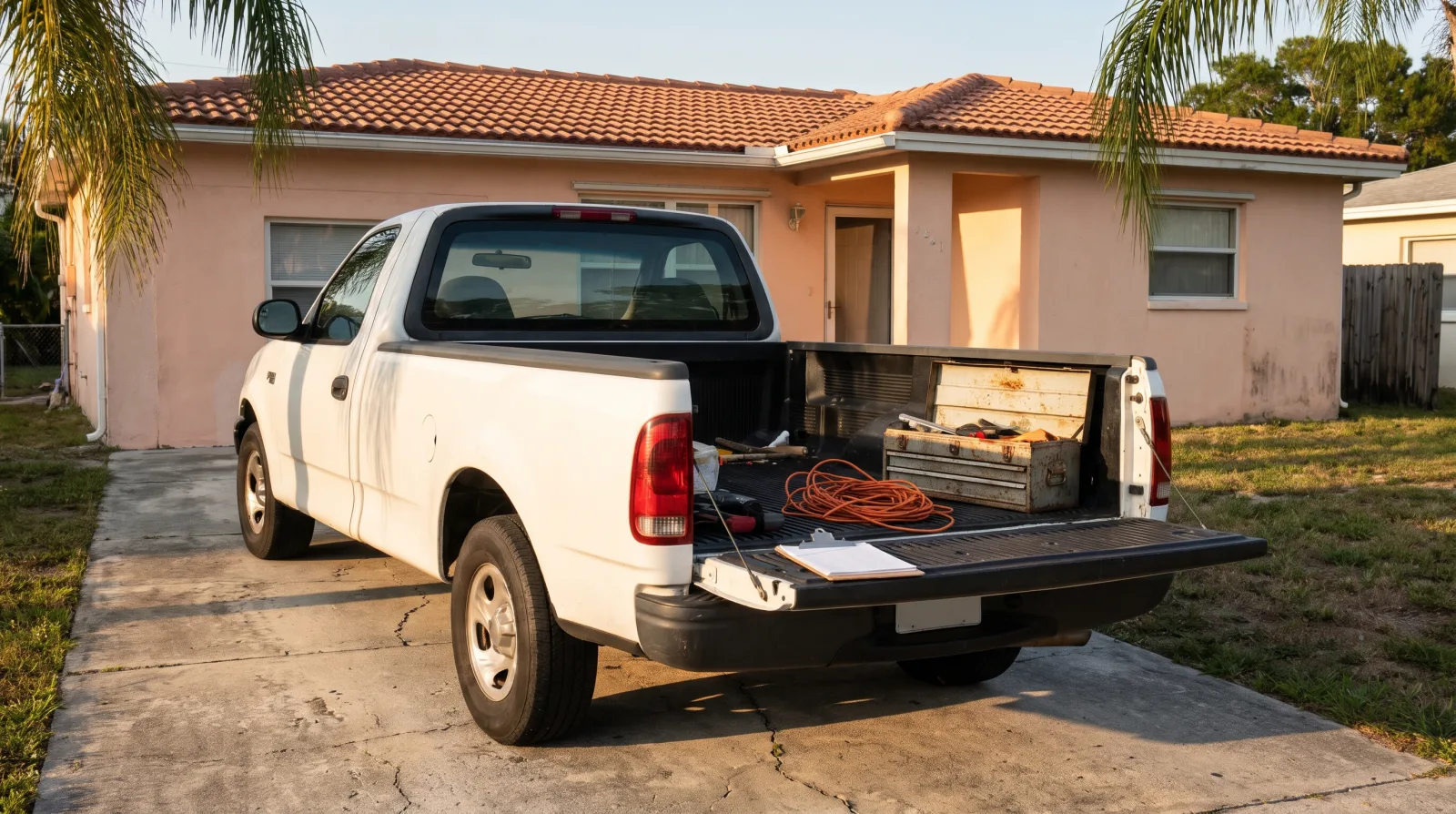
 The phone on the bench is where most of the marketing budget either pays off or leaks out.
Make the first contact easy, then protect it
A strong service page still has one job: move the homeowner to contact. Give them a clear primary action. For some trades that is a call. For planned work such as a garage floor or new pool cage, it may be an estimate request. Both can work, but the page should not make the visitor choose among a maze of forms, chat widgets, social links, and vague “learn more” buttons.
Then look at what happens after the click.
Who receives the form? Is the phone answered during business hours? What happens when the team is on a job? Does a missed caller get an acknowledgement and a realistic expectation for a return call? Is the estimate request assigned to a person, not merely sent to a shared inbox?
A missed-call text-back is useful here because it closes an awkward silence. It tells the homeowner their request arrived and gives your team a chance to take over. That small bridge matters because the homeowner is not waiting patiently with one browser tab open. They are comparing options while managing a problem at home.
This is also why buying leads cannot be your whole plan. Lead platforms can put opportunities in front of you, but they do not fix weak response habits or build your own recognition in the market. Contractor leads: buying them vs. building them explains the difference between renting demand and building a path you control.
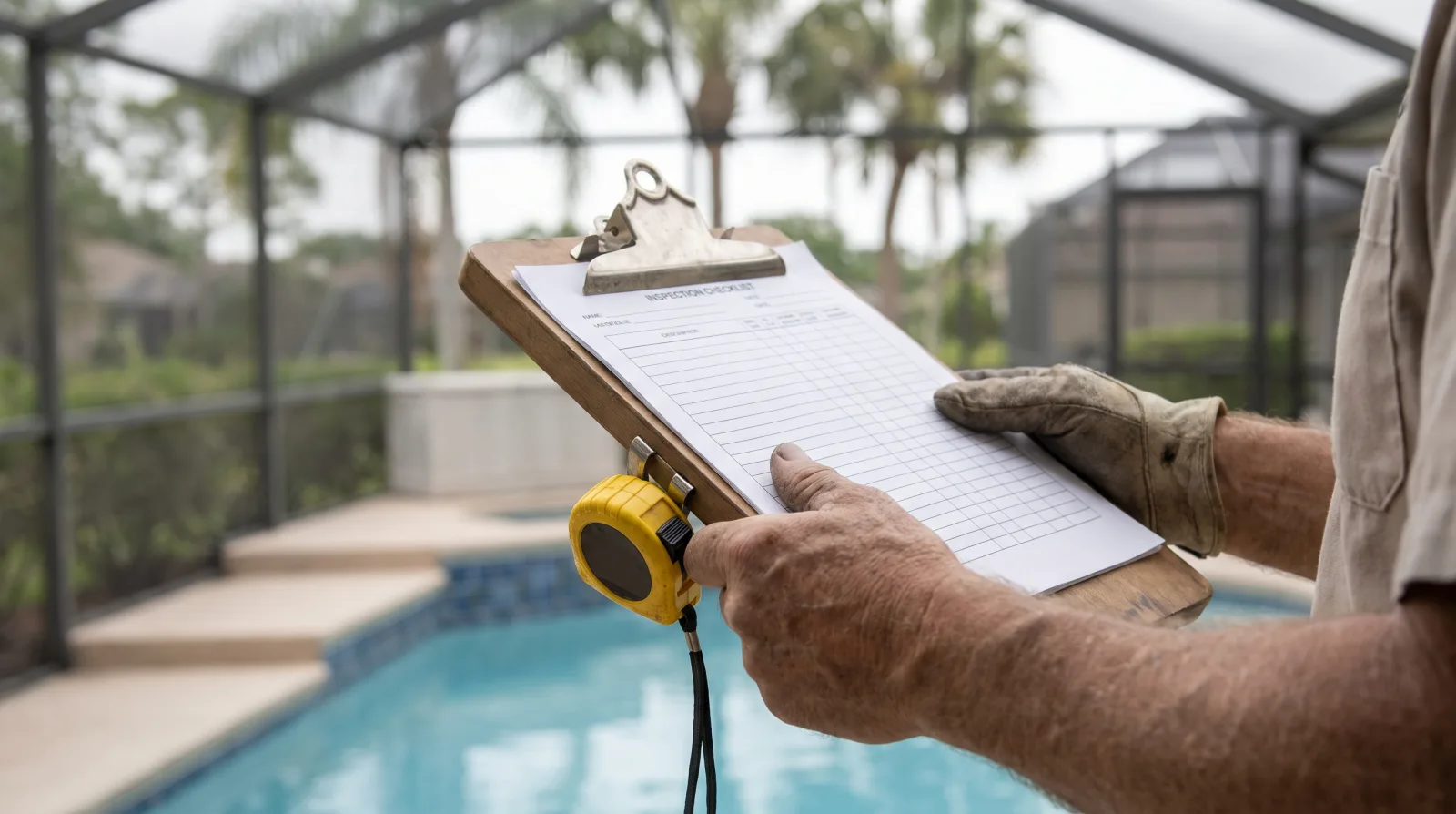 The estimate visit is where the homeowner decides whether the website told the truth.
Give the estimate process the same attention as the website
Marketing does not end when an estimate is booked. For many home service jobs, that is where the real comparison begins.
The homeowner has invited you into their consideration set. Your estimate process should make the next step obvious: when the visit happens, what you will inspect, what they should prepare, when they will receive options, and who answers questions after the appointment.
For a pool cage, that might mean explaining whether you are evaluating a repair, rescreen, or replacement and what conditions could affect the scope. For an epoxy floor, it might mean inspecting the slab, discussing use of the garage or workspace, and identifying preparation needs before discussing a finish. You need to remove surprises without overpromising.
Carry the same proof forward. A short project example relevant to the homeowner’s job is more useful than a giant gallery. A concise explanation of your process is more credible than broad claims that you are “the best.” The handoff from marketing to sales should feel like the same company kept talking, not like the website made promises the field team never saw.
Measure the breaks, not vanity activity
You do need to pay attention to results. But start with the chain of events rather than a pile of channel metrics.
Can you see which service pages bring calls and forms? Can you tell whether calls are answered or missed? Can you see whether estimate requests receive a response? Can you identify where a homeowner stops moving forward?
Those questions lead to practical fixes. A service page may need clearer language. A Google Business Profile may point to the wrong page. A form may request too much information. The office may need a clear owner for returning calls.
Review it weekly: find the break, fix it, and check whether the next homeowner gets a better experience. That beats adding channels because somebody said you need to be everywhere.
One path is easier to improve than five disconnected campaigns
The useful version of home service marketing is not a checklist of platforms. It is a connected system built around the work you actually want to sell.
A homeowner finds a clear local result. They land on a page that speaks to their job. They see evidence that your crew understands it. They can call or request an estimate without friction. Your team responds. The estimate process continues the same clear conversation.
That path works whether the job is an epoxy floor, a pool cage repair, an HVAC service call, or another project where trust has to be earned before the customer lets you into their home. Build that first. Then every channel has a place to send people.
— Creatively Grow, Tampa Bay, FL
Common questions
- What is the most important part of home service marketing?
- The most important part is a clear path from the moment someone finds you to the moment your team follows up. Your website, Google Business Profile, reviews, phone handling, and estimate process should all answer the same question: what should this homeowner do next?
- Should a home service company use paid leads?
- Paid leads can fill a gap, especially while you build your own demand. They are not a substitute for an owned path. If the lead platform controls the customer relationship, the rules, and the price, you need other ways for homeowners to find and remember your company.
- How do reviews help a home service business get more leads?
- Reviews reduce the risk a homeowner feels before making contact. Ask at the right moment after a completed job, make the request simple, and respond like a real business. Reviews work best alongside clear service pages, current job photos, and reliable follow-up.
- Why does fast follow-up matter for contractor leads?
- A homeowner who calls or fills out a form is usually trying to solve a current problem. A quick, useful response keeps the conversation with you. If nobody answers, an automatic text can acknowledge the request and give the homeowner a clear expectation for the next contact.