
How to get more Google reviews without being weird
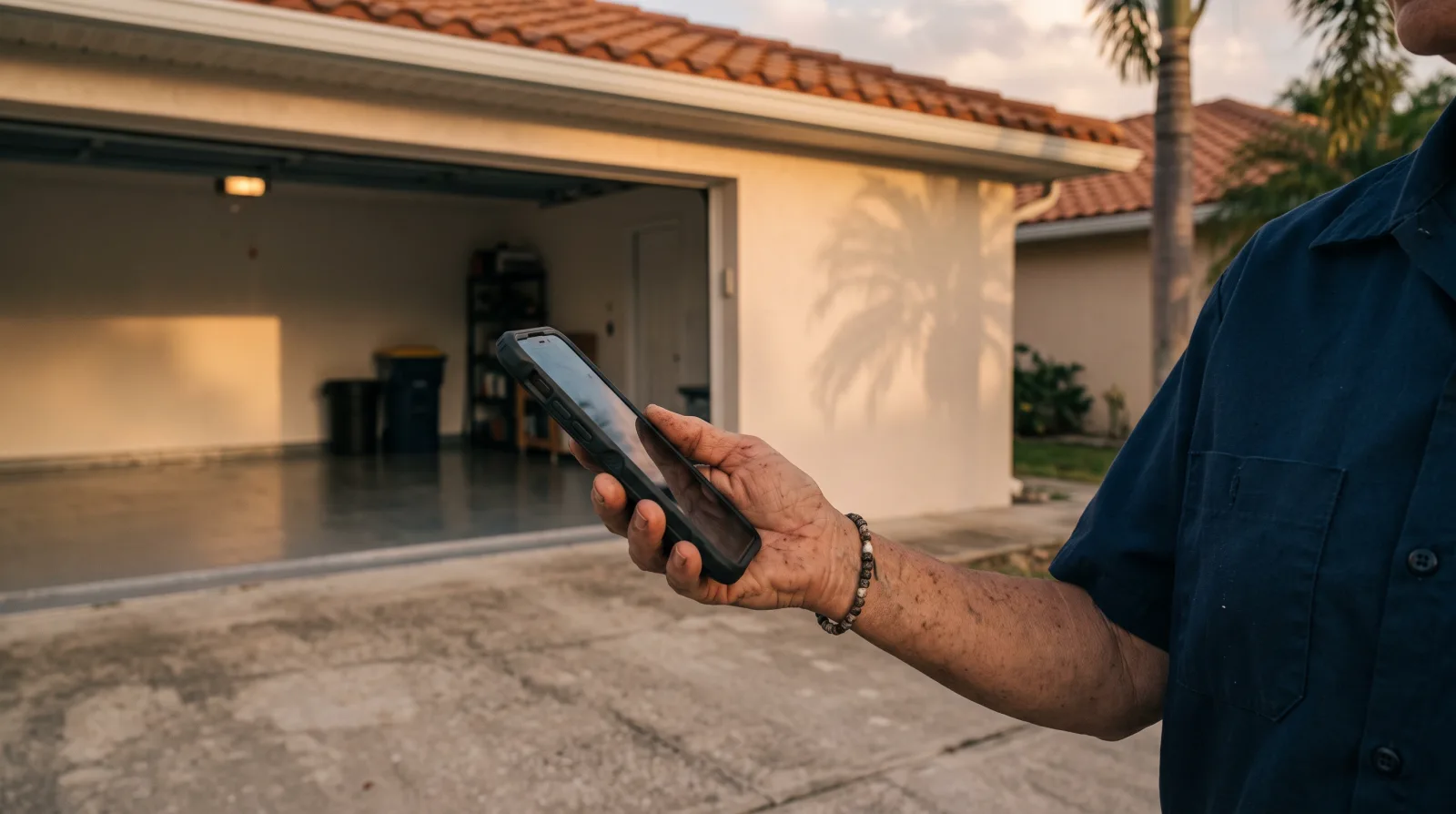
If you want to know how to get more Google reviews, stop treating the ask like a favor and build it into your job-close process. The system that works is simple: ask right after the customer has seen the finished work and is clearly happy, send one message on a channel they already use, include a direct link to your review screen, and follow up exactly once. No incentives, no scripts, no filtering. Your crew finishes the work; your follow-up makes that good experience visible.
Reviews are proof, not a marketing trick
A homeowner looking at an epoxy floor contractor is trying to reduce risk. They want to know whether the floor will be prepared correctly, whether the crew will show up, and whether the house will be respected while work happens. A homeowner comparing pool cage companies has the same basic questions: Will the estimate match the job? Will communication disappear after a deposit? Will the cleanup be handled?
A Google review is useful because it answers those questions in a customer's words. It is not useful because it says your company is “the best.” That kind of vague praise is easy to ignore. A review that says the crew explained surface prep, kept the garage usable, or resolved a scheduling question tells the next prospect what working with you feels like.
That is why the goal is not to collect generic praise. The goal is to make it easy for real customers to describe a real job.
Ask after the moment of relief
The timing of the request matters more than clever wording. A customer is most able to describe the experience when the work is complete, they can see the result, and the problem that brought them to you is gone.
For a concrete coating job, that could be the final walkthrough after the homeowner has seen a clean garage and understands cure and care instructions. For a screen enclosure repair or replacement, it could be when the patio is cleaned up and the homeowner has checked the finished enclosure with the installer.
Do not make the request part of the first sales call. Do not send it immediately after taking a deposit. And do not leave it for months because the office finally remembered to do “reviews.” At that point, the details have faded and the request feels random.
The field person does not need to turn the walkthrough into a speech. A simple verbal handoff is enough: “If you feel good about the job after you have had a chance to look it over, our office will send you a review link. Honest feedback helps people know what to expect.” Then the office sends the link while the completed job is still fresh.
Make the next step painfully simple
Most review requests fail because they make the customer hunt. The customer sees a message, thinks the job went well, and then has to search for your business, sign into Google, and remember what they wanted to say. That is too much friction for something they were not already planning to do.
Your message should include a direct link to the Google review screen for your business. Test the link yourself on a phone before it goes into any automation. It should lead the customer to the place where they can leave a review, not to a general search page, your website home page, or a map with several similar companies.
Use one channel the customer already uses with you. For many local contractors, text is practical because updates about arrival times, estimates, and job questions already happen there. Email can work too, especially when your closeout materials are sent by email. Do not blast the same request across every channel at once. That feels like you are chasing them.
A usable message is plain:
Thanks again for having us handle your garage floor. If you have a minute, would you share your honest experience on Google? Here is the direct link: [review link]. We appreciate it.
That is enough. It identifies the job, asks for an honest review, and removes the obstacle. It does not tell the customer what to write. It does not ask for five stars. It does not turn a completed project into another sales interaction.
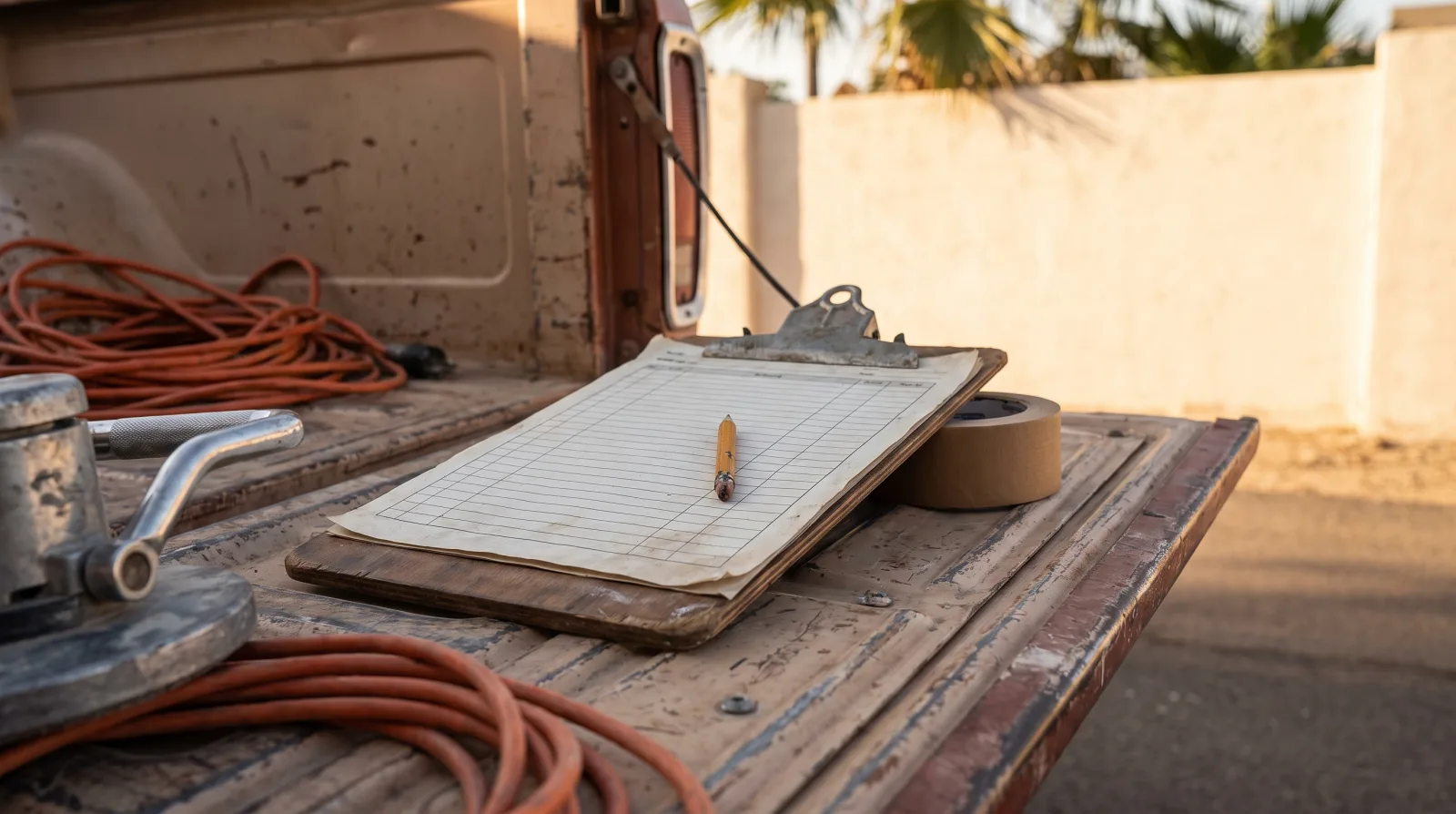 The review request belongs on this, not in somebody's memory.
Build the request into your closeout checklist
“Remember to ask for reviews” is not a process. It is a wish that disappears when the office is busy, the installer is headed to the next job, or a customer calls about something unrelated.
Put the review request in the same workflow as final payment, warranty information, care instructions, and photo permissions. The exact tool matters less than the handoff being clear. Someone needs to know that the job is complete, that the customer is satisfied enough to ask, and that the request has either been sent or held for a reason.
A basic checklist can look like this:
- Mark the job complete after the final walkthrough.
- Record whether the customer raised an unresolved issue.
- Send care, warranty, or maintenance information.
- Send the review request with the direct link when there is no open problem.
- Follow up once, politely, if there is no response.
- Stop. Do not turn one request into a campaign that annoys a customer who already paid you.
The “unresolved issue” step is important. A customer who is waiting on a touch-up, a replacement part, or an answer from the office should get help, not a review request. Use the request as a discipline check: if you hesitate to ask, find out what is incomplete and close that loop first.
This is the same systems thinking that matters in marketing for contractors. The individual message is small. The connected path—from job completion to customer follow-up to public proof—is what keeps it from depending on somebody's memory.
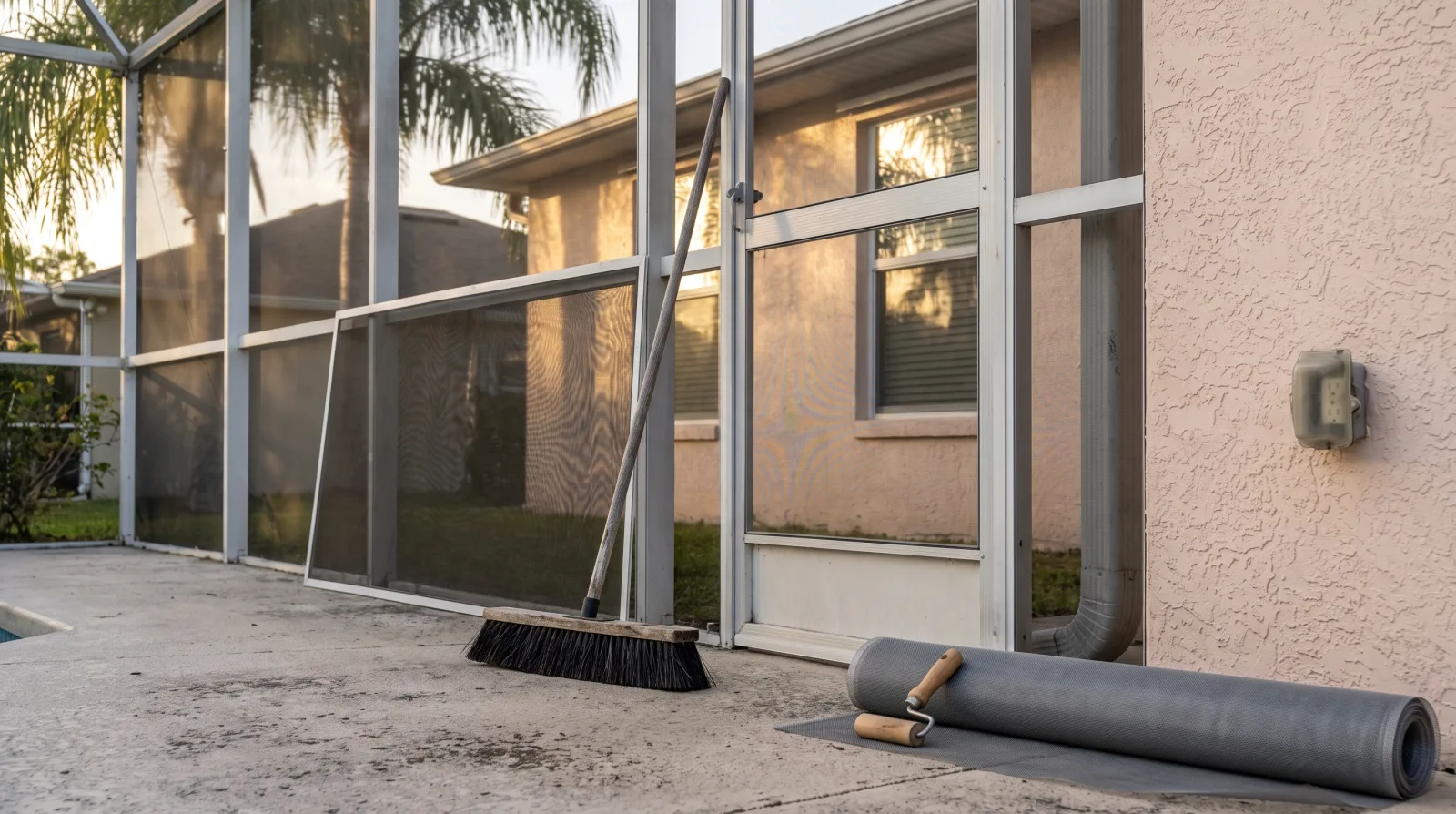 Cleanup the homeowner can see is the part they end up describing.
Give the customer something real to talk about
You cannot write a customer's review for them, but you can make the job easier to remember by doing the basics well. Specific communication creates specific feedback.
Before an epoxy installation, explain what surface preparation involves and what the homeowner should move or protect. During the job, explain what happens next and when the floor can be used. At closeout, leave clear care instructions. Those moments give a customer concrete facts to mention if they choose to write.
For a pool cage project, confirm the scope in plain language. Tell the homeowner when materials or crew schedules change. Make the final cleanup visible rather than assuming they will notice it. The details are not review bait; they are the work. Good reviews are the residue of a job that was managed well.
You can also ask an open question in your request, such as “What was it like working with our team?” That is better than prompting a list of phrases you want them to repeat. It leads to natural language, and it keeps the review credible to the next homeowner reading it.
Do not buy praise or filter out unhappy customers
The shortcut is tempting: offer something only for a glowing review, send happy customers to Google and unhappy customers to a private form, or ask friends who never hired you to post. All three create a weak foundation.
First, they are not a fix for the underlying service problem. Second, a pattern of polished, vague praise does not answer the questions a serious buyer has. Third, you lose the chance to learn where your handoff failed.
You can absolutely make it easy for a dissatisfied customer to reach you. Your final walkthrough can ask whether anything needs attention. Your completion message can include a direct office contact for questions. When a concern appears, respond to it and document the resolution. But do not use a separate path as a way to keep only good feedback public.
A healthy review process asks customers for honest feedback. It then treats the feedback as operating information. If several reviews mention slow callbacks, that is not a copywriting issue. It is an office-process issue. If people repeatedly praise a crew member's communication, make that behavior part of how you train and schedule crews.
Fix the response gap before you ask for more leads
Review generation is connected to lead handling. A homeowner who cannot reach you during the estimate stage is unlikely to become the customer who recommends you later. The job may be excellent, but the path already felt unreliable.
Start with the phone. When someone calls after hours or while the team is on a job, what happens? Does the call vanish into voicemail? Does the caller get a quick acknowledgement and a way to continue the conversation? A missed-call text-back is not magic, but it can keep an interested prospect from moving on while you are unavailable.
Then make sure the office can see where that person is in the process: new inquiry, estimate scheduled, job sold, work underway, final walkthrough, completed. That is the same practical foundation behind contractor SEO: being found is only useful if the business can respond and convert the opportunity into a well-run job.
More reviews do not replace reliable operations. They make reliable operations easier for future customers to see.
A review system should sound like you
Owners often avoid asking because they do not want to sound needy or scripted. That instinct is right when the message is needy or scripted. You do not need to write like a marketing department.
Use the language you would use at a final walkthrough. Thank the customer. Name the work you did. Give them an honest, low-pressure option to share their experience. Make it easy. Then return to running the business.
The point is not to create a perfect online reputation in a week. The point is to let the steady stream of completed, well-managed work leave a public trail. Over time, a homeowner comparing contractors has more than your own promises to go on. They can see how past customers describe the experience.
— Creatively Grow, Tampa Bay, FL
Common questions
- When should I ask a customer for a Google review?
- Ask right after the customer has seen the completed work, understands what you fixed or built, and is clearly satisfied. For an epoxy floor, that may be at the final walkthrough. For a pool cage, it may be after the cleanup and handoff. Do not wait until the job is a distant memory.
- Can I offer a discount or gift for a Google review?
- Do not make a reward conditional on a positive review. That creates an awkward transaction and can conflict with platform rules. A better system makes a straightforward request, gives the customer the direct link, and follows up once if they have not responded.
- What should a contractor's review request say?
- Keep it short, specific, and easy to answer. Thank the customer, mention the completed job, include one direct review link, and ask them to share their honest experience. Do not write a script for their review or ask for a certain star rating.
- How do I get reviews when the office misses calls?
- First fix the missed-call gap. An automatic text-back can acknowledge the caller and create a path for scheduling a conversation. Then the office needs a clean handoff from estimate to completed job, so review requests go only to real customers after the work is done.