
Home improvement marketing on a real budget

Home improvement marketing on a real budget
Home improvement marketing on a real budget works when you stop buying disconnected tactics and build one path from local search to a real conversation: be easy to find, easy to trust, and easy to reach. Add paid lead sources only where they support that path instead of replacing it.
A real budget is not a tiny version of a big-company plan
You do not need a pile of subscriptions, a new campaign every week, or a dashboard full of colored charts. You need a buyer to move from “I have a problem” to “I know who I should call” without hitting a dead end.
For a home improvement company, that path is usually plain:
- A homeowner searches for a service near them.
- They see your Google listing, a service page, a referral, or a paid listing.
- They check whether you do the kind of job they have.
- They look for proof that you show up and finish work properly.
- They call, text, or submit a form.
- Someone responds while the homeowner is still trying to solve the problem.
Marketing gets expensive when one of those steps is weak and you try to cover it with more traffic. If your pool cage repair page does not say what you repair, where you work, or how to request an estimate, buying more clicks will not fix it. If an epoxy flooring prospect calls after work and gets voicemail with no quick follow-up, the lead cost is not the central problem. The handoff is.
That is why marketing for contractors is a system, not a stack of channels. A real budget should pay for the parts of the system that keep working after the initial spend.
Start with the service that can carry the work
Do not market every service equally just because you can perform it. Pick the work you want more of and make the page, proof, and follow-up around that work specific.
An epoxy floor contractor might separate residential garage coatings from commercial floor coating work. The homeowner with a garage floor problem needs a different explanation from a facility manager thinking about durability, downtime, and surface preparation. One generic “epoxy flooring” page asks both people to do the sorting themselves.
A screen enclosure company has the same issue. New pool cages, rescreens, door repairs, and enclosure restoration are related, but they are not the same request. A person with torn mesh after a storm wants to know whether you handle repairs. A homeowner considering a new enclosure wants examples that look like the project they are planning. Give each core offer its own clear home.
A useful service page answers practical questions without forcing people to call first:
- What do you actually install, repair, or improve?
- What type of property is the service for?
- Which places do you serve?
- What should the customer expect before work starts?
- What proof can they look at now?
- What is the simplest next step?
This is not about stuffing a city name into every sentence. It is about reducing uncertainty. A person should know they are in the right place before they ask for time on your calendar.

Most inquiries arrive while the crew is still in the field. Who answers, and how fast, decides what the rest of the budget was worth.
Make local search a foundation, not a side project
When a homeowner needs a contractor, they often begin with a local search. That makes your Google Business Profile and the pages behind it basic operating equipment.
Keep your business name, phone number, hours, service areas, and website accurate. Choose categories that match what you actually do. Add current job photos when you have permission. Respond to reviews like a person, not a template. If your team serves a defined area, make that easy to understand rather than pretending you cover everywhere.
Your website has to support the listing. A Google profile can get the click, but a vague page can still lose the inquiry. Connect the profile to a page built around the actual service, not just the homepage. If a customer finds you while looking for a pool cage rescreen, send them to information about rescreens, relevant job proof, and a clear way to contact you.
The same principle drives contractor SEO. You are not trying to win search with clever wording. You are helping search engines and homeowners confirm what you do, where you do it, and why your business is a credible option.
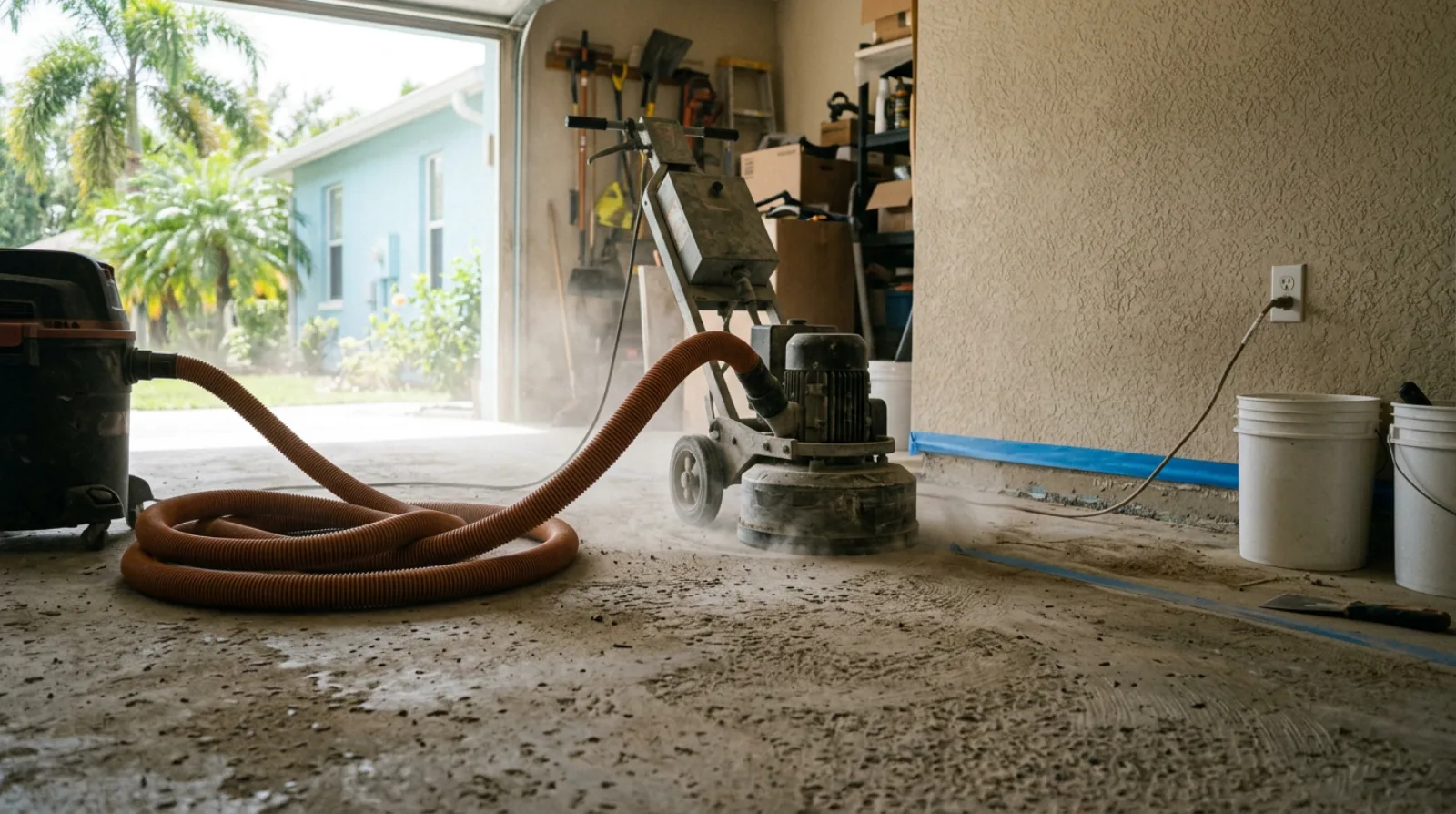
Prep work is what the homeowner never sees and what the job actually depends on. Marketing has the same unglamorous middle.
Put proof where the customer needs it
Home improvement is a trust purchase. People are inviting someone onto their property and paying for work they may not know how to judge themselves. They look for evidence that the company is real, local, capable, and responsive.
Useful proof is specific. It can include:
- Before-and-after photos that clearly show the kind of work you want to sell.
- Short project notes explaining the problem and the scope.
- Reviews that describe the experience in the customer’s own words.
- A straightforward introduction to the owner or crew.
- A short brand story film that lets a homeowner see who will be handling the job.
Video belongs here as proof, not as the whole marketing plan. A simple, honest film can make an epoxy contractor less anonymous or help a pool cage company explain how it approaches a project. It still needs a service page, reviews, local visibility, and a fast response process around it.
Be careful with portfolio material. A demo build is not a completed client job. Use it to demonstrate a page structure or a customer path, not as evidence that you performed work for a company. Real proof has to be real.
Treat reviews as part of the job closeout
Many contractors ask for reviews when work is slow, then stop asking when the schedule fills up. That produces a random-looking profile and puts the request on the customer instead of the process.
Make the review request part of finishing a job well. Decide who asks, when they ask, and what link or message they use. The best moment is generally when the customer has seen the completed work and knows how the experience went—not months later when the details are gone.
Keep the request direct. Thank them for trusting you, say that reviews help local homeowners choose a contractor, and give them one easy link. Do not write a script for them. Do not offer incentives in exchange for a positive review. Do not pressure a frustrated customer into public feedback before you have tried to resolve the issue.
A review system is useful because it creates fresh, relevant proof over time. It also tells you what customers notice: communication, clean work areas, scheduling, craftsmanship, or how problems were handled. That feedback belongs in operations as much as marketing.
Do not let paid lead platforms own the relationship
Lead platforms can have a place. They can introduce you to demand you have not reached yet, help fill a gap in a service area, or give a newer company opportunities to practice its sales process. The problem comes when the platform becomes your only source of work and your business never builds an audience or reputation it controls.
A bought lead often arrives beside competitors. The homeowner may be focused on speed or price. You still need to answer promptly, qualify the job, explain your process, and follow up. The platform did not solve that part.
Use paid sources with rules. Know which service you are promoting. Know the locations you will take. Know who receives the inquiry and what happens if they are on a job. Review the quality of the conversations, not just the volume of names arriving in your inbox.
Meanwhile, keep building owned assets: service pages, a current Google profile, reviews, job proof, a referral habit, and a contact process. Contractor leads: buying them vs. building them explains the tradeoff in more detail. Bought leads can be a tool. They are a fragile foundation when nothing else feeds the pipeline.
Fast follow-up protects the money you already spent
A homeowner who reaches out is usually comparing options quickly. They may be calling from the driveway, between meetings, or after noticing a problem they want handled soon. Your marketing can do its job and still lose if nobody responds.
Build a simple contact routine before you add more channels. Route calls to someone who can answer. If a call is missed, send a text that acknowledges it and makes the next step simple. Make form notifications visible to a real person. Keep a short set of questions ready so the team can identify the service, location, timing, and basic job fit.
This is especially important for trades that spend the day in the field. The owner may be estimating, installing, or inspecting work and cannot take every call. That is normal. Silence after the call is the problem. A missed-call text-back system gives the homeowner a response and gives your team a chance to continue the conversation when it is safe to do so.
Do not confuse speed with a hard sell. The goal is to make it clear that a real business received the request and has a next step. That alone separates you from many local options.
Build the budget in the order that reduces waste
When funds are limited, sequence matters. Start with the work that improves every lead source, then test additions one at a time.
First, make the core service pages and contact path usable. Next, clean up local business information and create a consistent review request. Then gather real project proof as jobs are completed. Once those pieces are in place, test a paid source, a neighborhood partnership, a referral push, or a focused search campaign that supports a specific service.
Do not change everything at once. If you revise the page, launch ads, change the person answering calls, and join a lead platform in the same week, you will not know what helped or what created more work for the office. Keep notes on where inquiries came from, what service they wanted, whether you reached them, and what happened next. You do not need elaborate attribution to see obvious breakdowns.
A real budget is not about doing less carelessly. It is about doing the few connected things that make a homeowner comfortable taking the next step. For an epoxy floor installer or pool cage contractor, that usually beats a louder message pointed at a broken path.
— Creatively Grow, Tampa Bay, FL
Common questions
- How much should a home improvement company spend on marketing?
- Start with the amount you can keep funding long enough to learn from it. Put that money into the customer path first: a clear service page, proof, local visibility, review requests, and fast follow-up. Do not split a small budget across every channel at once.
- What is the best marketing for a small home improvement business?
- The best starting point is marketing you own: a useful website page for each core service, an accurate Google Business Profile, recent reviews, job proof, and a way to answer every inquiry quickly. Paid lead sources can fill gaps, but they should not be the whole plan.
- Should a contractor run Google Ads on a small budget?
- Google Ads can make sense when you know which service, area, and call handling process you are supporting. It is a poor first fix for a vague offer, weak proof, or unanswered calls. Build those basics before asking ads to compensate for them.
- How do epoxy flooring and pool cage companies get more leads?
- They make it easy for a homeowner to understand the job, see relevant proof, verify local credibility, and reach a real person. An epoxy company should show the types of spaces it coats. A pool cage company should show enclosure work, repair options, service areas, and next steps.