
Roofing marketing after the storm chasers leave
Roofing marketing after the storm chasers leave
Roofing marketing works when a homeowner can tell you are local, reach a real person fast, and trust that you will still answer once the roof is finished. Build that proof and follow-up path before the next storm, so you are the safer choice when the door-knockers leave. Shouting loudest after bad weather is not the job.
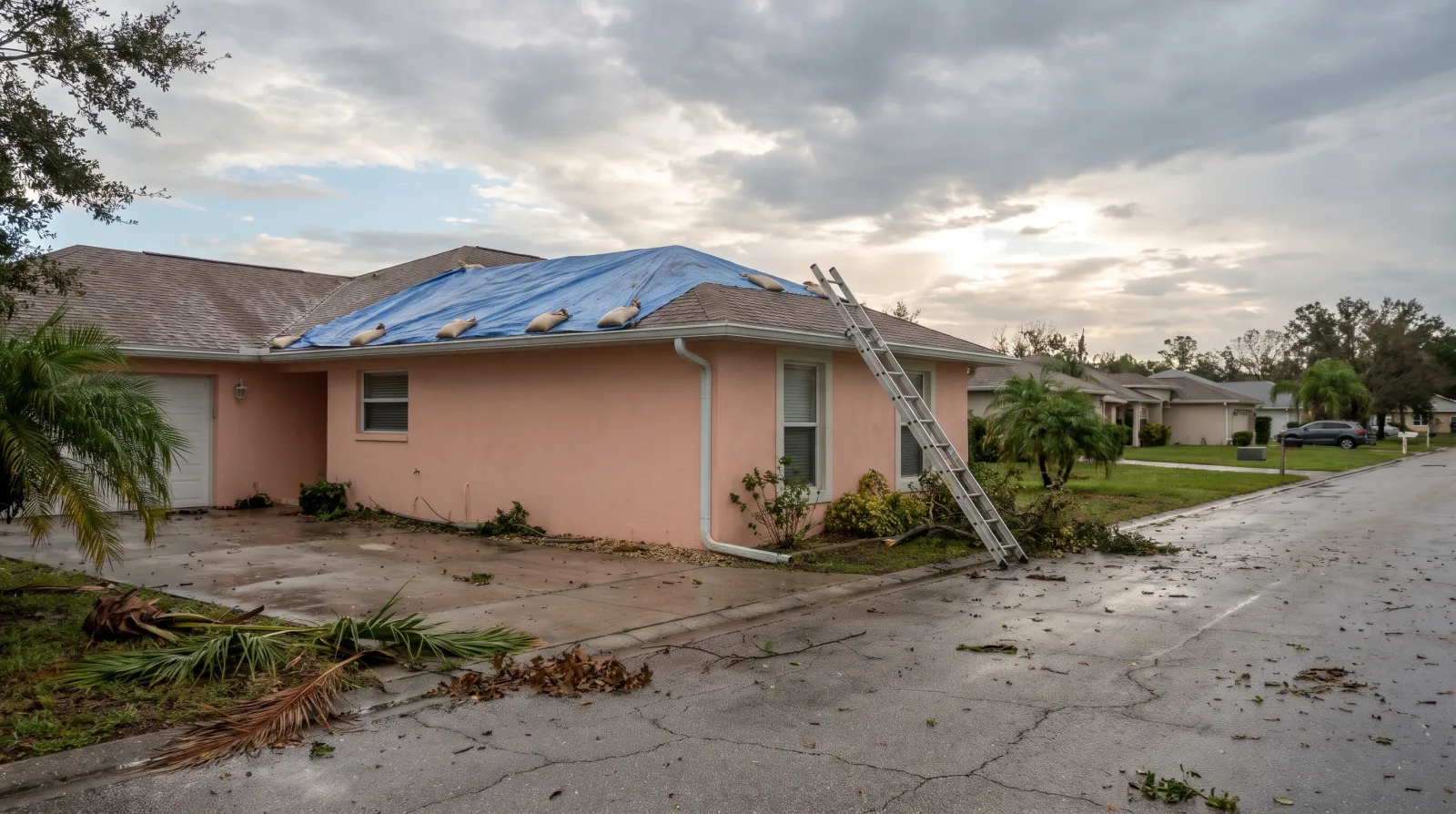 The morning after, every house on the street is deciding who to trust with the roof.
The homeowner is trying to avoid a second problem
A storm creates urgency, but it also creates doubt. A homeowner may have water coming in, an insurer to call, and several companies leaving door hangers in the neighborhood. They are not looking for a clever campaign. They are trying to figure out who will inspect the roof honestly, communicate clearly, and answer if something needs attention later.
That changes what roofing marketing needs to do. A logo, a broad promise about quality, and a form at the bottom of a generic page do not settle those questions. Your presence has to answer them in the order a homeowner asks them:
- Do you actually work here?
- Can I reach you now?
- Have you done this kind of roof before?
- What happens after I request an inspection?
- Who is responsible if I need help later?
The companies that stay busy after the immediate rush are usually the ones that make those answers easy to find. That is a better foundation than trying to outspend a temporary crew for a few loud weeks.
Own the map result before you need it
When someone searches for a roofer in their city, the map results are often the first useful comparison they see. Your Google Business Profile is not a side project. It is the practical storefront for people who have never heard of you.
Finish the basics with the same care you would use on a job: the right primary category, a real local phone number, accurate hours, actual service areas, and every roofing service you want to be found for. Add current photos of finished work. Keep the profile aligned with what your team can really take on. If you do not handle commercial roofs or emergency tarping, do not imply that you do.
Reviews are part of that proof. Ask when the customer has seen the finished roof and knows the job is complete, not weeks later in a generic email. Make the request simple and consistent. A steady record of recent, specific customer feedback says more than a sudden pile of vague reviews after a storm.
The local-search mechanics are covered in more detail in Contractor SEO: the parts that actually move the phone. The short version is that a useful profile and real evidence help both the person choosing and the search result deciding what to show.
Build pages for the jobs you want, not pages for every phrase
A roofing site does not need a page for every nearby town with the city name swapped out. It needs useful pages for the actual decisions people make.
Start with a page for each core service: roof repair, roof replacement, inspections, storm damage assessment, or whatever your company truly offers. On each page, explain the problem, the kind of work involved, what a visit looks like, and what affects the scope. Use photos from real work where permission allows. State where you work. Put a clear phone number and contact option where someone does not need to hunt for it.
A good page helps a homeowner understand whether they should call you. It does not pretend to diagnose every roof from a paragraph. Be plain about that. An inspection may reveal different conditions than a homeowner can see from the driveway, and insurance questions belong with the carrier and qualified professionals involved in the claim.
The lead dies if your response path is loose
A homeowner who calls several roofers is not necessarily price shopping alone. They may simply be testing who responds. Your crew cannot answer every call while on a roof, driving between inspections, or meeting a customer. That is normal. Silence is not.
Set up a missed-call text-back that acknowledges the call and tells the person what happens next. It should sound like a company, not a robot: confirm that you received the request, set a realistic expectation for a return call, and avoid promising an appointment before someone has checked the schedule.
Then decide who owns the first response. Not vaguely. Name the role and the handoff. Someone needs to confirm the address, the issue, whether there is an active leak or a safety concern, and the best time to talk. Someone needs to log it. Someone needs to follow up when an estimate is sent. A form submission that sits in an inbox while the team assumes someone else handled it is not a marketing problem. It is an operations leak.
The same principle applies across trades. Construction marketing that fits a small crew lays out why answering or acknowledging the phone belongs ahead of more complicated marketing work. You cannot improve the value of a lead you never properly receive.
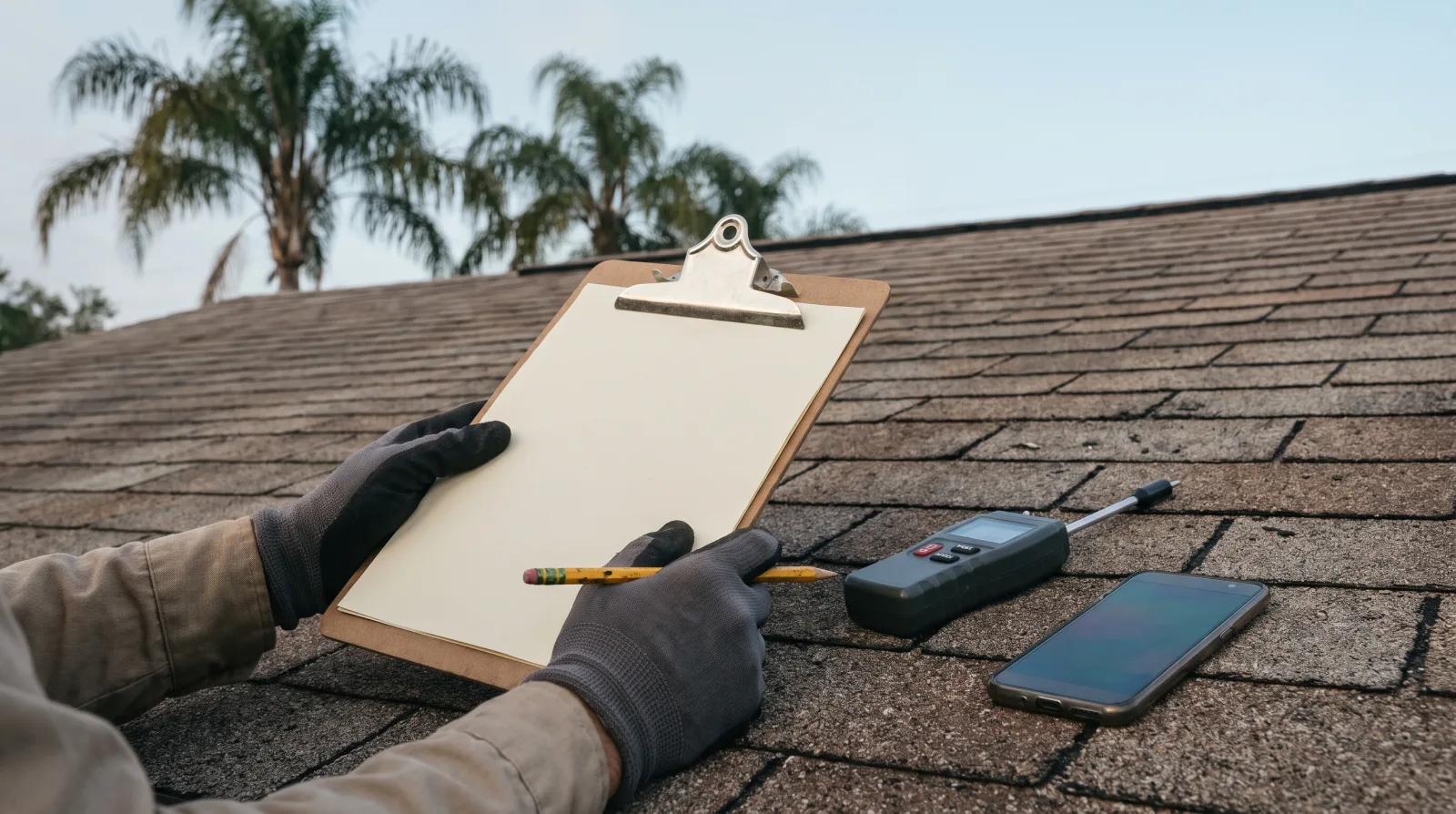 Telling a homeowner exactly what the inspection covers is proof a door-knocker cannot fake.
Use the inspection process as a trust asset
Storm chasers often sell speed and urgency. A local roofing company can be more specific. Explain how your inspection works before the homeowner calls: what you look at, what you document, what they receive afterward, and what you will not claim to know until you inspect the roof.
That does not mean turning the site into a technical manual. It means replacing vague language with usable information. “We care about your home” is forgettable. “We inspect the roof, discuss visible conditions, document what we find, and explain the next step before asking you to decide” gives a homeowner something concrete to expect.
Your estimate process deserves the same clarity. Say whether the estimate is emailed, reviewed by phone, or discussed on site. Say who the customer contacts with questions. If scheduling depends on material availability, weather, permits, or insurance timing, explain that those factors exist rather than acting surprised later. Clear expectations protect the relationship you are trying to earn.
Show local work without manufacturing a case study
Do not invent a story about the perfect roof transformation. Do not borrow a photo from another market and make it look local. The proof should be ordinary and real: a finished roof, a clean jobsite, a short explanation of the type of project, and details you are allowed to share.
A short owner-led video can help here, but it is not the strategy. A walkthrough of a completed job can show scale, condition, cleanup, and the person standing behind the company. It can live on a relevant service page, in your Google Business Profile, or alongside a review. It works because it supports the proof already on the page, not because “video” is supposed to solve marketing by itself.
If you build location pages, earn them. Use them for places where you have real service experience and useful local context. A page about a coastal community might address wind exposure or homeowner-association requirements only if those are conditions you actually encounter there. Do not publish thin city pages by the dozen. Homeowners can feel the difference, and search engines do not need more copied text.
Keep the marketing working after the weather clears
The storm cycle exposes whether your system exists. The work that keeps it healthy is less dramatic:
- Update the profile when services, hours, or service areas change.
- Add real project proof as jobs are completed.
- Ask for reviews as a standard closeout step.
- Check missed calls, form submissions, and estimate follow-ups every week.
- Improve service pages when customers repeatedly ask the same question.
That is not glamorous, and it is not a campaign that ends on Friday. It is a local business becoming easier to verify and easier to work with. When the next rush hits, you are not starting from an empty profile and an unanswered phone.
What to skip
Skip the things that make the business look busy without making it easier to choose:
- Buying traffic before you know who responds and how quickly.
- Generic “storm damage experts” pages with no local work or process behind them.
- Review requests sent only when someone remembers.
- Promises about insurance outcomes you do not control.
- A flood of social posts that lead nowhere useful.
- Brand language that hides the basic questions about service area, inspections, and next steps.
Roofing marketing earns its keep when it reduces uncertainty for a homeowner and creates a reliable handoff for your team. The roof is high stakes. The marketing should make the first decision simpler, not louder.
— Creatively Grow, Tampa Bay, FL
Common questions
- What is the first thing a roofing company should fix in its marketing?
- Make it easy for a homeowner to reach a real person and see proof of local work. A complete Google Business Profile, accurate service pages, recent reviews, and a missed-call response path come before spending more on traffic.
- Should roofers run ads after a storm?
- They can, but only after the response path is ready. If calls are missed, service areas are unclear, or the landing page does not explain the inspection and estimate process, more ad clicks just create more dropped conversations.
- How can a local roofer compete with storm-chasing companies?
- Compete on verifiable local presence rather than noise. Show completed work, explain who handles the job after the sale, collect reviews consistently, and state the service area and process plainly. Those details are difficult for a temporary operation to fake well.
- Does video matter for roofing marketing?
- It can help as proof, not as the whole plan. A short walkthrough of a finished roof or an owner explaining the inspection process can help a homeowner judge the work. It belongs on pages and profiles that already make contact and next steps clear.