
Video marketing for small business: what it’s actually for
Video marketing for small business: what it’s actually for
Video marketing for small business works when each video has one job in the buying process: explaining a service, showing the actual work, introducing the person who will do it, or answering the question that stalls an estimate. It supports the page, the review, and the follow-up rather than replacing them. It is not a separate magic channel, and it is not the plan by itself.
Video is not the marketing plan
A small business owner can lose a lot of time trying to “do video” without deciding what video is supposed to fix.
Maybe the phone rings, but callers do not understand the service. Maybe the leads are good until they see a competitor’s lower-looking price. Maybe people fill out a form and then disappear because they are comparing three companies that all sound the same. Maybe an owner has real workmanship and a good crew, but the website still looks like every other local contractor site.
A video can help with any of those. It cannot replace a clear offer, accurate local information, useful service pages, prompt follow-up, or a review process. Without a job to do, video is decoration.
Think of video as evidence and explanation. It lets someone see the work, hear how you talk about it, and picture what happens after they contact you. That matters in home services, where a buyer is letting a stranger work on a property they care about.
If you need the wider system first, read Marketing for Contractors: A System, Not a Campaign. Video belongs inside that system. It is not above it.
Give every video one clear job
Before filming, name the moment in the customer path where the video will be used. That one decision makes the content more practical and keeps the production from wandering into vague “brand awareness.”
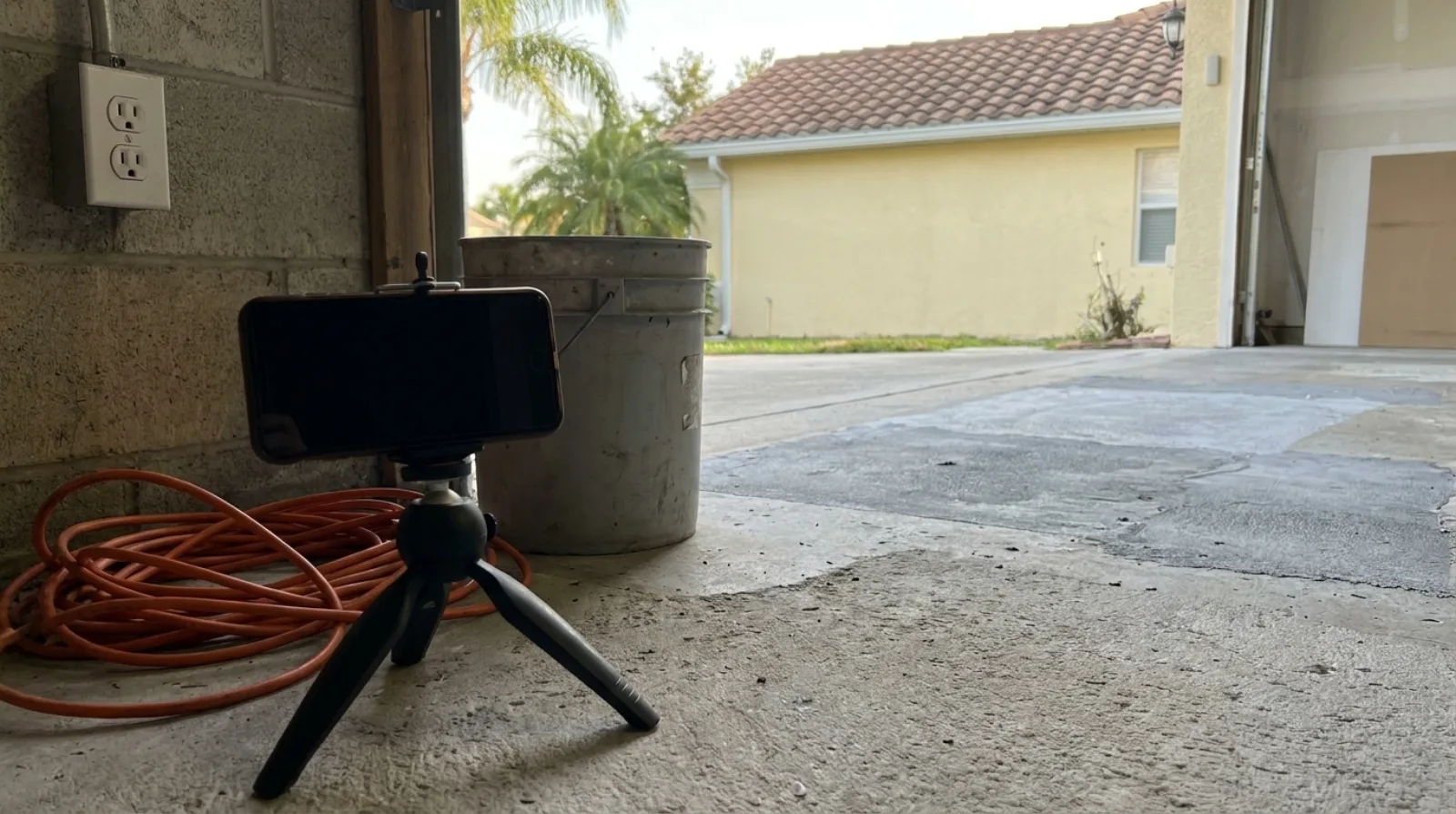
For an epoxy flooring company, a short walkthrough can show what a homeowner is actually buying: preparation, repairs, coating stages, texture, and the finished floor in a real garage. It is not necessary to make the viewer an installer. The point is to answer the uncertainty behind questions such as, “What will my garage look like while this is happening?” and “Why are estimates different?”
For a pool cage or screen enclosure company, the useful video might explain the difference between a repair and a replacement, show how a crew protects the work area, or walk through the choices a homeowner makes before installation. A buyer who understands the process can have a better first conversation with the office.
Common jobs for a small-business video include:
- Introduce the owner or crew. A local buyer wants to know who is coming to the house and how they communicate.
- Explain a service. Use the questions people ask before they request an estimate, not industry jargon.
- Show the proof. Walk through a finished job and let details of the work carry the message.
- Remove a specific objection. Explain what affects scope, timing, preparation, or the difference between two options.
- Support follow-up. Send a relevant video after a missed call, inquiry, estimate, or visit instead of making the prospect hunt through a site.
- Make a review more believable. A real customer story can add context to written reviews, provided the customer is comfortable participating and the story stays factual.
One video can serve more than one place — a project walkthrough could live on a service page, be clipped for a social post, and be sent to an interested homeowner. But it still starts with one primary job, which prevents the familiar trap of saying everything in one glossy montage.

The topics worth filming are already written down somewhere — in the estimator's notes, the office's inbox, the questions asked at the kitchen table.
Start with buyer questions, not camera ideas
Owners often begin with equipment, drone shots, music, or a competitor’s reel. Those are production choices. They are not content strategy.
Start by listening to the conversations already happening in the business: the questions your office gets before an estimate, what the estimator says people misunderstand at the kitchen table, the messages that arrive after a missed call, what people ask when they are comparing a cheaper bid.
The best first topics usually sound almost too ordinary:
- What does this service include?
- What do you need from me before the crew arrives?
- What can change the scope of this job?
- How do I choose between these two options?
- What does a finished result look like in a home like mine?
- Who will be doing the work, and how do I reach them if I have a question?
Those questions are close to money because they appear when a person is deciding whether to proceed. An answer video does not need a dramatic hook. It needs a plain answer delivered by someone who knows the work.
This is also where video can make written pages more useful. A service page should still explain the service in text. Search engines and readers need that clarity. The video adds the human explanation and visual proof that text cannot always carry. Pair it with the right page instead of uploading it to social media and hoping a local customer happens to find it.
For the search side of that work, Contractor SEO: The Parts That Actually Move the Phone lays out why service pages, local signals, and clear intent still matter.
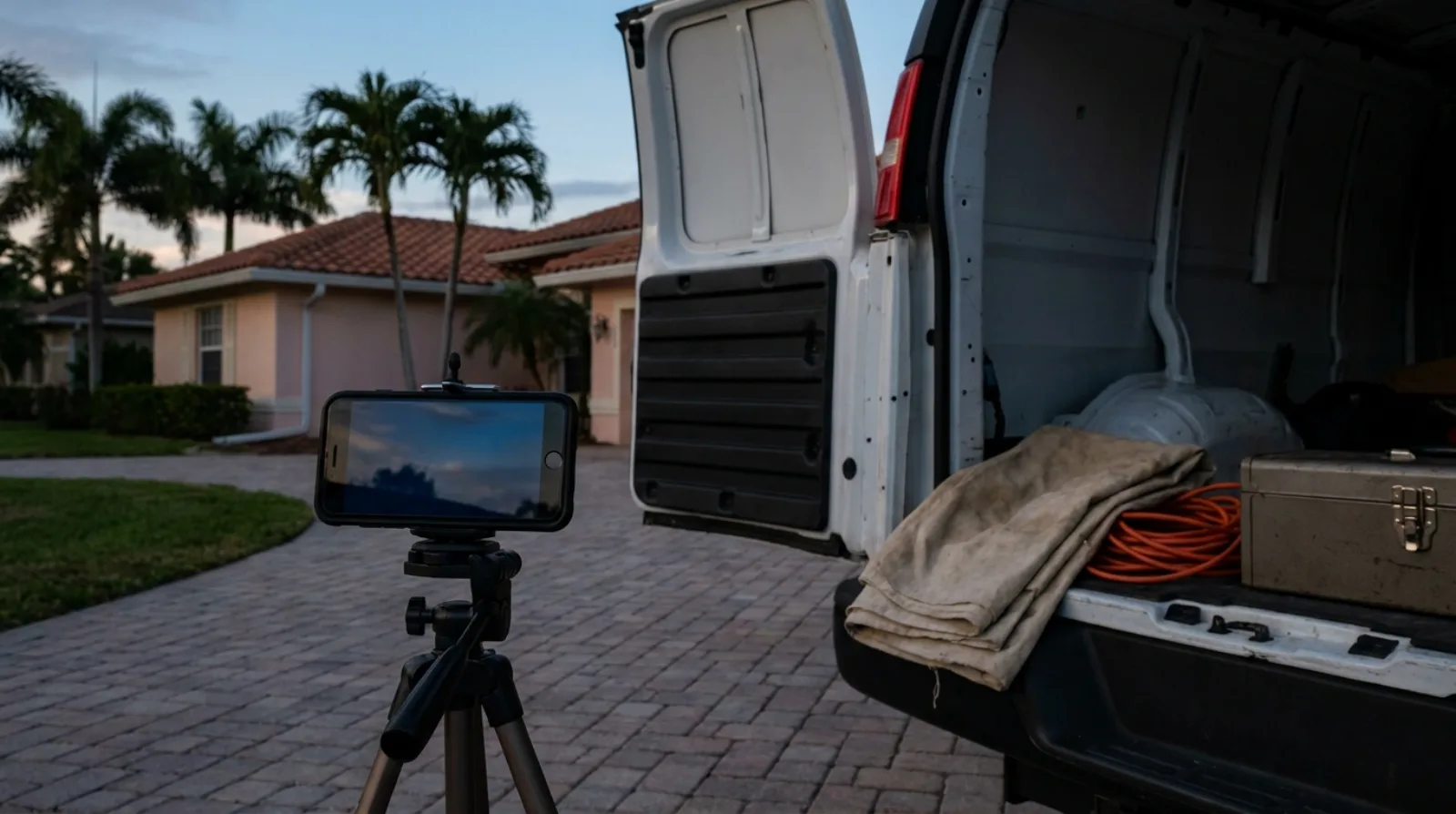
A video only earns its keep where a decision is actually being made — on the service page, in the follow-up, at the tailgate before an estimate.
Put the video where the decision happens
A finished video sitting alone on a social profile is not a distribution plan. Social can be useful, but a local business should place the asset where a prospect is already trying to make a decision.
Start with the service page. If you have a page for garage floor coatings, a project walkthrough or process explanation belongs beside the written explanation, examples, and contact path. If you install screen enclosures, a clear “what to expect” video belongs on the page a homeowner reaches after searching for the service.
Use it in the follow-up path as well. When an inquiry comes in, the first response should be fast and useful. If the person asked about a specific service, a relevant video can answer their immediate question while the office sets the next conversation. It is better than sending a generic “just checking in” message days later.
An estimator can use a video on either side of a visit — beforehand to prepare the homeowner for what will be discussed, afterward to reinforce the part of the scope that tends to confuse people. It should not pressure anyone. It should make the process easier to understand.
Google Business Profile and reviews have a role here too. Keep the profile accurate, keep answering real questions, and keep asking customers for honest feedback after the work is done — How to Get More Google Reviews (Without Being Weird) covers the ask itself. A video does not excuse weak basics. It gives those basics a stronger story once someone reaches them.
Make proof, not a commercial
Most local-service buyers are not looking for a cinematic commercial. They are looking for signals that you do what you say, communicate clearly, and understand the job in front of them.
That changes the creative brief. Instead of writing broad claims like “quality you can trust,” show the part of the process that demonstrates care. Instead of saying the team is experienced, let the owner explain a common job condition and the decision it requires. Instead of stacking before-and-after shots with no context, walk through one project and explain why the approach fit that property.
An epoxy-floor video could follow a garage floor from preparation through the final coating and explain the decisions a homeowner has to make along the way. A pool-cage video could break down the parts of an enclosure and the practical questions worth asking before signing. Label what the viewer is looking at accurately — a demonstration is a demonstration, a completed customer job is a completed customer job, and blurring the two is the fastest way to lose a prospect who later notices. The useful part is the clarity, not a claim that the company has a secret method.
Keep the language natural. A contractor does not need to become a spokesperson. A clear owner, estimator, or project lead explaining real work is usually more credible than a script full of marketing terms.
A simple production standard is enough
You do not need to wait until every part of the business looks perfect. But you do need to avoid making a video that creates new doubts.
Make sure the person speaking can be heard. Film in a place that shows the job or the business honestly. Use a simple outline so the explanation has a beginning, a useful middle, and a clear close. Keep claims specific and supportable. If a detail depends on the job, say that instead of pretending every project works the same way.
A practical outline is:
- Name the homeowner question.
- Give the plain answer first.
- Show the relevant part of the work, place, or material.
- Explain the condition or decision that affects the answer.
- Point the viewer to the appropriate next resource or conversation.
That last step is not a hard sell, it is basic navigation. The viewer should not finish a useful explanation with no idea where to find service details or request information.
Avoid overbuilding the first project. You can learn a lot from one honest service explanation or one project walkthrough. Then you can see whether it improved the conversations it was designed to support. If the office still hears the same confusion, the answer may need to be clearer, the page may be incomplete, or the process itself may need attention.
Judge it by the conversation it improves
Do not judge local video only by views, likes, or follower count. Those numbers can be interesting, but they do not tell an owner whether the right homeowner understood the service or took the next step.
Ask more practical questions. Are prospects arriving clearer about what the service includes? Does the estimator spend less time correcting the same misunderstanding? Does the service page now give someone enough confidence to call?
The answer will not always be “make another video.” Sometimes the real issue is slow response time, an unclear offer, missing reviews, or a site that makes it difficult to contact you. That is useful to learn. Video is doing its job when it exposes where the customer path is weak, not when it hides that weakness behind polished footage.
For a small business, the point is simple: make the next decision easier for a real local buyer. Build the video around that decision, place it where it is needed, and let it work with the rest of the system.
— Creatively Grow, Tampa Bay, FL
Common questions
- Is video marketing worth it for a small business?
- It can be, if each video has a job in the buying process. A clear project walkthrough, owner introduction, service explanation, or review story can help a prospect decide whether to call. It is less useful when it is made only to collect views with no next step or place in the customer path.
- What type of video should a local contractor make first?
- Start with the question you answer most often before an estimate: what the work includes, how the process works, what affects scope, or what homeowners should prepare for. For an epoxy floor or pool cage company, a straightforward project walkthrough is usually more useful than a polished generic brand commercial.
- Do small-business videos need to go viral?
- No. A local service business does not need a large audience of strangers. It needs the right nearby homeowner to understand the offer and feel comfortable contacting the company. A video can do useful work on a landing page, in a follow-up text, on a Google Business Profile, or in a proposal without becoming broadly popular.
- How does video fit with local SEO?
- Video does not replace local SEO. The page, service information, location signals, reviews, and Google Business Profile still need to be accurate and useful. Video gives a real person or project context once someone reaches those assets. Used together, the written page answers search intent while the video reduces uncertainty.