
Landscaping marketing past the spring rush
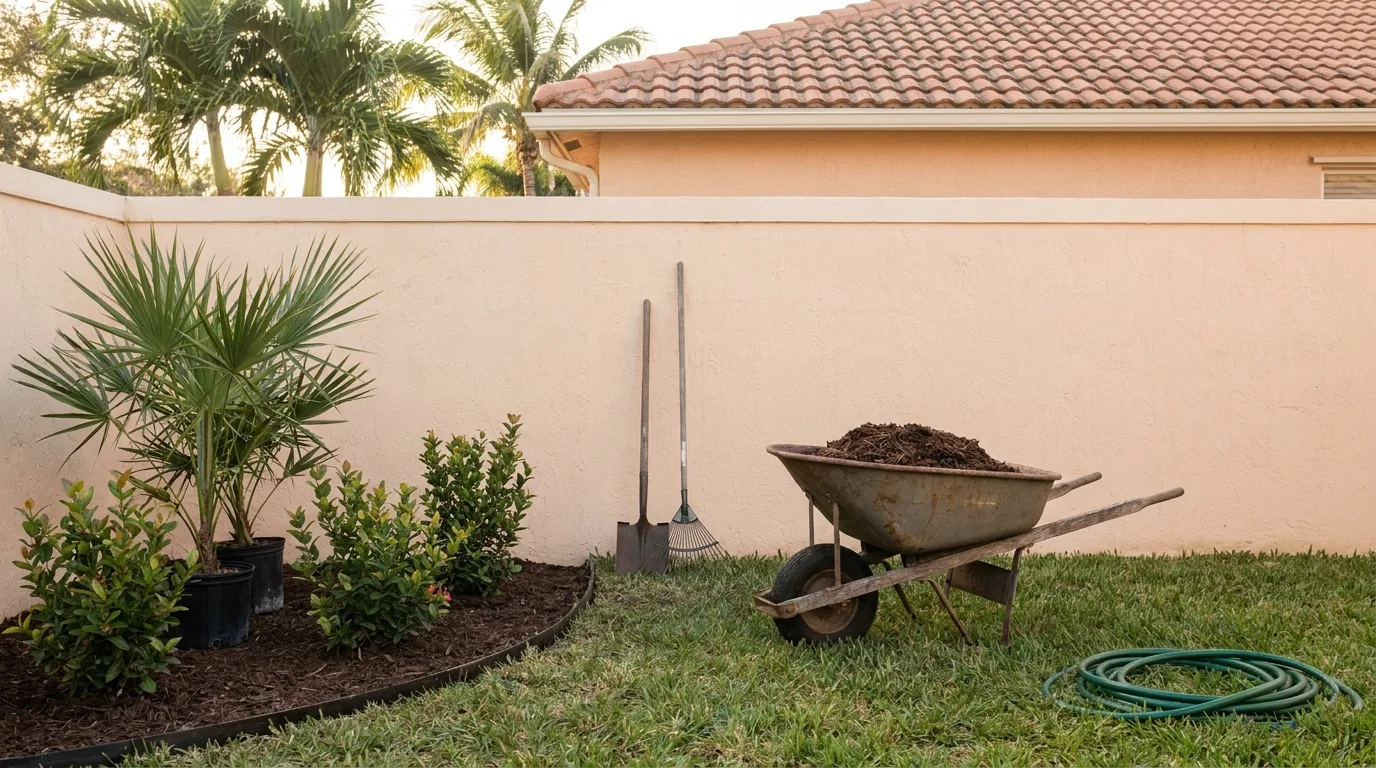
Landscaping marketing works after the spring rush when the next project is already visible
Landscaping marketing should not disappear when spring cleanup calls slow down. The job is to turn seasonal attention into a clear path toward the outdoor problems and projects homeowners still care about: show the work, match it to a specific need, make contact simple, and follow up before the homeowner starts over with another company.
The spring rush is not a marketing plan
Spring can make a landscaping business feel busy without making it durable. Calls arrive because lawns wake up, beds look neglected, and homeowners finally walk outside again. That is demand. It is not a system you control.
If your marketing only says “landscaping services,” it leaves too much work to the homeowner. They have to decide whether you handle drainage, a worn patio edge, privacy planting, lighting, irrigation adjustments, or a full backyard reset. They have to guess what a project should look like. They have to trust that the person answering the phone can handle more than mowing.
The better approach is to organize your landscaping marketing around the moments that create a decision. A homeowner might notice water collecting near the house after a storm. They may be tired of an exposed backyard, want a cleaner entrance before listing a home, or finally be ready to make the pool area usable. Those are different searches, different conversations, and often different project scopes.
You do not need a separate brand for each one. You need a website and follow-up process that make each path obvious.
Start with the work you want more of
A full schedule can still be full of the wrong work. Before you spend on ads, post another before-and-after, or hire someone to “do marketing,” decide what jobs deserve more attention.
Make a simple list:
- Work that fits your crew and equipment
- Work with a clear homeowner problem behind it
- Work you can explain and show honestly
- Work that creates a sensible next step or future maintenance relationship
- Work that is practical in your service area and calendar
For example, a company that wants more outdoor-living work should not bury that offer beneath a generic services list. It should explain the parts of the project: grading, planting, hardscape, lighting, privacy, drainage, or whatever the crew actually performs. A homeowner should be able to look at a page and say, “That is close to what I need.”
The same principle applies to pool cages and screen enclosures. A landscape company may not build the enclosure itself, but it may be the team that makes the space around it usable: drainage around the slab, privacy planting, access paths, lighting, planting beds, or an outdoor-living layout. Do not pretend you provide a trade you subcontract or do not perform. Explain your role plainly and show how it fits the larger project.
A narrow, honest offer converts better than a broad promise nobody can picture.
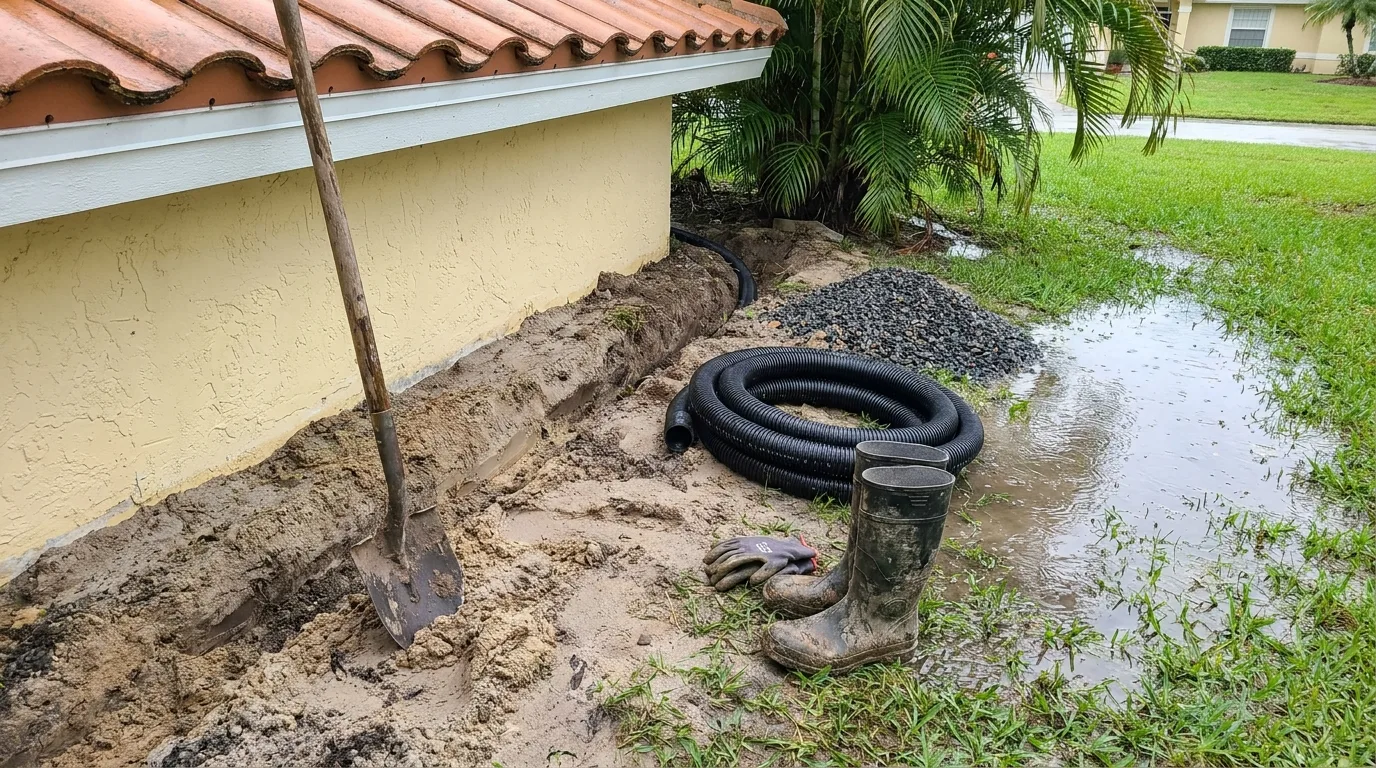 A drainage job is a specific problem with a specific page behind it, not a line in a services list.
Your site has to answer the homeowner’s first questions
Most landscape websites make the owner work too hard. They lead with a logo, a vague claim about quality, and a gallery with no context. That can look polished while doing very little to help a person choose.
Each important service page should answer a few plain questions:
- What problem is this work meant to solve?
- What is included, and what is not?
- What does the process look like before work begins?
- What kind of property or project is a fit?
- What should the homeowner do next?
Use actual project language. “Backyard drainage that keeps water from sitting where you use the yard” tells a homeowner more than “complete landscaping solutions.” “Privacy planting around an open pool area” gives them something they can recognize in their own property.
Good proof matters here, but proof needs context. A photo of a finished yard is weaker than a short explanation of the starting condition, the constraint, and the work completed. If a project involved a pool cage, say whether the landscape work addressed the perimeter, access, planting, lighting, or drainage. Do not imply that a demo build or a concept image is completed client work. If you use a concept during sales or planning, label it as a concept.
This is the same discipline behind contractor SEO: useful pages answer a specific local intent instead of trying to rank a single generic page for everything.
Build an owned path instead of renting every conversation
Lead platforms and paid ads can put inquiries in front of you. They can also make every new job feel rented. The moment you stop paying or lose placement, the phone stops with it.
Landscaping marketing gets stronger when the path belongs to you:
- A service page explains the relevant work.
- Local search and referral traffic find that page.
- Reviews reinforce that you show up, communicate, and finish well.
- A simple form or call route captures the inquiry.
- Someone responds quickly with a useful next step.
- The project creates proof, a review request, and a reason to stay in touch.
That does not mean you must reject paid channels. It means a paid click should land somewhere useful, not on a homepage that asks the visitor to figure everything out. If you run an ad for drainage, send people to drainage information. If a past customer clicks a seasonal email about lighting or a backyard refresh, send them to the exact service or project page that answers the question.
The distinction matters because the customer relationship starts before the estimate. A homeowner who understands what you do is easier to qualify than one who only clicked a generic “get quote” button.
Use your completed work as the raw material
Your crew is already producing the material most landscaping marketing needs. The problem is that it usually stays in phones, text threads, and memory.
Create a simple job-close routine. Before the crew leaves, gather the information that will help the next homeowner make a decision: a few clear photos, the problem the customer came in with, the work performed, and any useful constraint. Keep it factual. You are not writing a case study with inflated results. You are documenting what changed.
A short brand-story film can help a homeowner understand the people and process behind a higher-consideration project. It is not the whole strategy. Put that story beside specific project proof, reviews, and a clear contact path.
Epoxy floors and pool cages have the same gap. A glossy floor or a clean enclosure gets attention, but the buyer still needs to know whether it fits their surface, site, and schedule. Landscaping is no different. Finish photos get attention; concrete explanations help people act.
For how to build proof before you scale traffic, see starting or growing a concrete coating business.
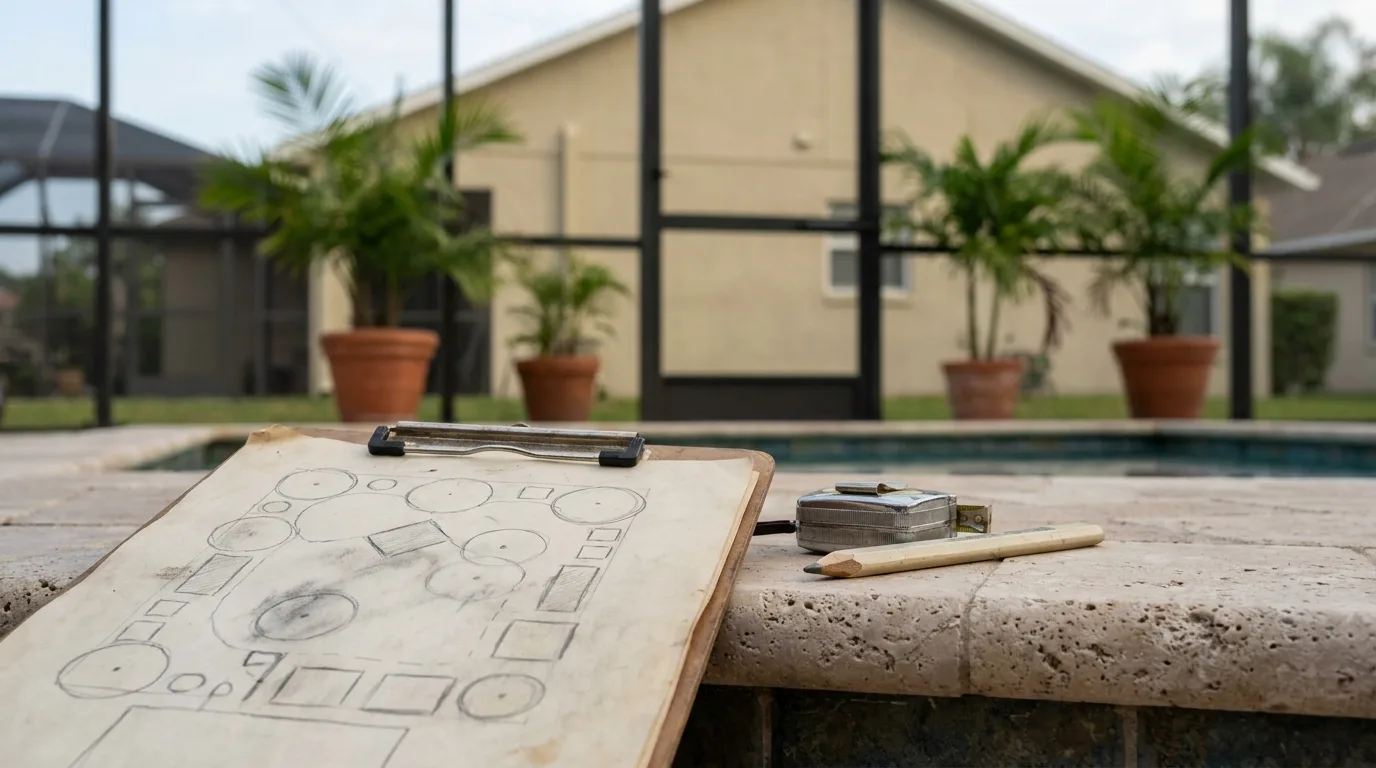 The next phase is often sitting in last year’s job notes.
Follow up while the project is still relevant
A lot of landscaping revenue is lost in silence, not competition. An inquiry comes in after hours. An estimate goes out and sits. A past customer needs a new phase but has no reminder that you do it.
Build follow-up around the natural stages of the work:
- Confirm a new inquiry and state what happens next.
- After a site visit, summarize the problem and the decision in plain language.
- When an estimate is sent, make it clear how to ask questions or choose an option.
- If the homeowner is not ready, leave a useful reason to reconnect rather than repeatedly pushing for a yes.
- After completion, ask for a review when the experience is fresh and keep a record of future opportunities.
A missed call needs a response too. A simple text-back that identifies the company, acknowledges the call, and sets expectations is better than making a homeowner hunt for another number. It does not replace answering the phone. It prevents an avoidable dead end when you cannot.
Past customers are especially important for outdoor-living work. The person who hired you for a front-bed refresh may later need drainage, lighting, a patio reset, or planting around a new pool cage. That is not a reason to spam them. It is a reason to keep accurate job notes and send relevant, timely information when you have something useful to say.
Reviews are part of the sales path, not decoration
Landscaping buyers are hiring people onto their property. They care about the finished result, but they also care about crew conduct, cleanup, communication, schedule changes, and whether the work matched the conversation.
Ask for reviews as part of the closeout process, not as a random campaign when business slows. Make the request simple. Do not script a fake review or offer a reward for praise. You want the customer’s own description of what it was like to work with you.
Then use that language where it helps the next buyer. A review about clear communication belongs near a project that requires planning. A review about cleanup matters near a property-sensitive installation. A review about solving a water problem belongs on a drainage page. The point is not to scatter star graphics everywhere. The point is to reduce the uncertainty that stops someone from contacting you.
The operating details of that process are covered in how to get more Google reviews without being weird.
Measure the handoffs, not vanity activity
Do not judge landscaping marketing by how busy your social feed looks. Track the handoffs that tell you whether the customer path is working:
- Which service pages create calls or form submissions
- Whether the source of an inquiry is recorded
- How quickly a real response happens
- How many inquiries become site visits or estimates
- Which types of work move forward
- Whether completed jobs produce a review, referral, or another project opportunity
You do not need a complicated dashboard to learn from this. A consistent spreadsheet, CRM, or job system is enough if people use it. The purpose is to see where a homeowner gets stuck. If a page gets visits but nobody calls, it may be unclear. If estimates sit, the scope or follow-up may need work. If good projects come from referrals but never from search, your local pages and reviews may not be carrying their share.
Marketing past the spring rush is not about finding a clever offseason trick. It is about making the work you want easy to understand, easy to trust, and easy to start—then keeping the relationship alive after the crew leaves.
— Creatively Grow, Tampa Bay, FL
Common questions
- What is the most important part of landscaping marketing?
- Make it easy for a homeowner to understand what you do, see proof that fits their kind of property, and take one clear next step. That path matters more than adding another channel. A good inquiry still needs a quick, useful response from a real person.
- How can a landscaping company get work after spring?
- Do not market only cleanup, mowing, or the seasonal task people already expect. Build pages and proof around problems that remain: drainage, privacy, outdoor living, lighting, planting plans, hardscape repairs, and refresh projects. Then follow up with past customers when those needs are timely.
- Should landscapers buy leads?
- Bought leads can cover an empty spot, but they do not create an owned customer path. Treat them as a temporary source, not the business model. Your site, reviews, service pages, and follow-up system should give a homeowner a reason to contact you directly.
- Does a landscaping business need local SEO?
- Yes. Homeowners commonly start with a local search when they have a visible problem or a project in mind. Local SEO works when your Google Business Profile, service pages, project proof, service area information, and reviews all describe the same business clearly.