
Starting or growing a concrete coating business without guessing
Starting or growing a concrete coating business without guessing
Starting or growing a concrete coating business comes down to one repeatable path: show honest proof of the work you want, make your Google profile and website say the same thing, answer every estimate request fast, and ask for a review at the end of each finished job. Everything else is noise until that path runs consistently.
First, decide what job you are actually trying to win
“Concrete coating” covers different conversations. A homeowner with a stained garage floor is not necessarily looking for the same thing as a property manager with worn walkways or a shop owner with a floor that needs a particular finish. If you speak to everybody in the same vague language, nobody can tell whether you are right for their job.
Start by naming the work you want more of. It might be residential garages, patios, lanais, pool-deck surfaces, commercial interiors, or a narrower specialty. You do not have to refuse every other inquiry. You do need a default focus for your website, job photos, estimates, and follow-up.
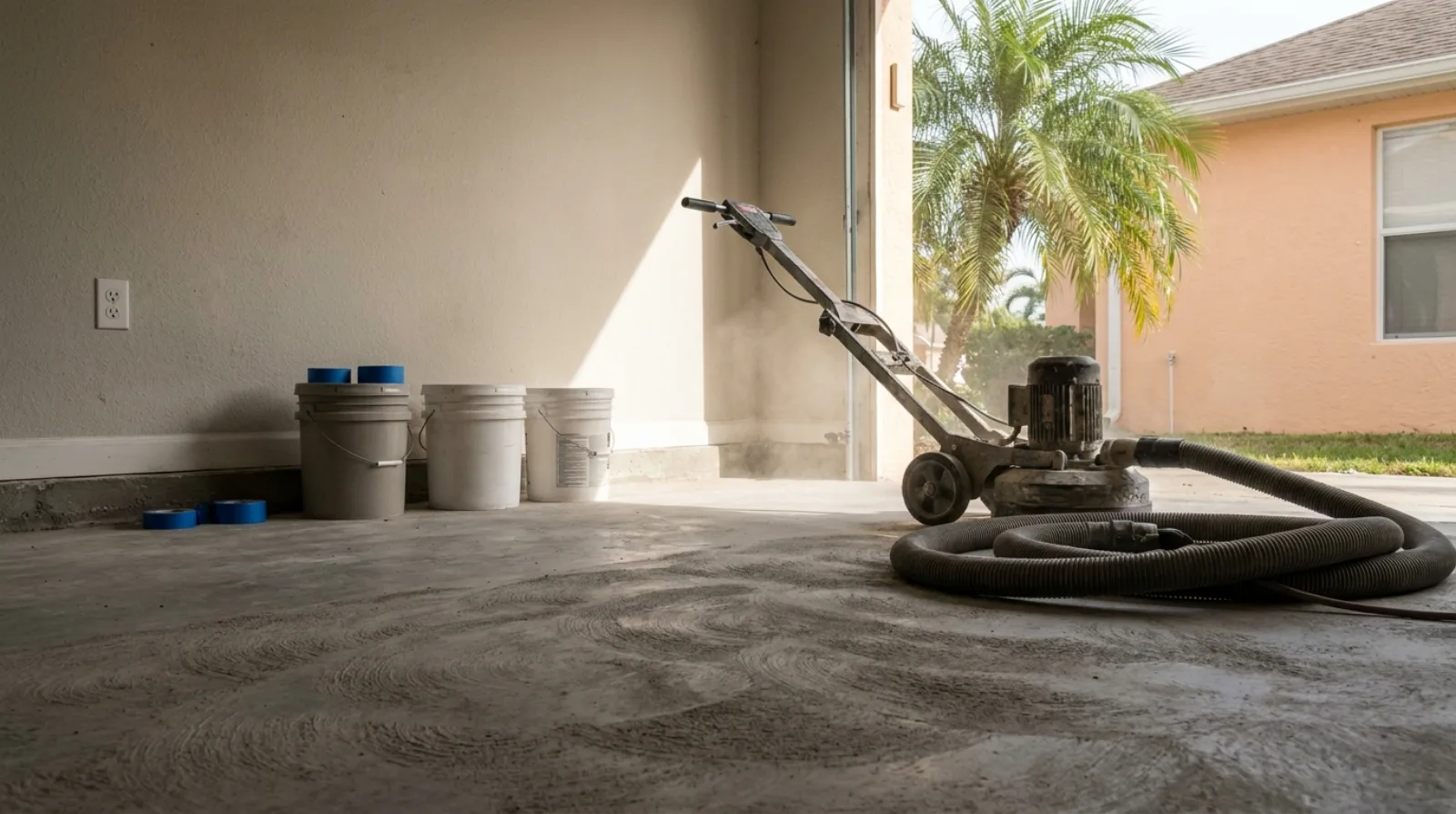
That focus changes the proof you show. A garage customer wants to see surface preparation, clean edges, and how the space looks when the car comes back in. A commercial prospect may care more about scheduling around operations, durability, or a clear scope. Put the right examples beside the right questions.
The same is true for service area. A small crew can lose a lot of useful time driving to estimates that never made sense. State the communities you serve. Say what happens after a person reaches out. A local buyer should not have to infer whether you work in their neighborhood or whether they will hear from you this week.
Treat your offer like a decision, not a material list
People do not usually wake up knowing which coating system they need. They know they are tired of dust, stains, cracks, a hard-to-clean floor, or a garage that looks unfinished. Your job is to help them make a safe decision without talking down to them.
Explain the practical parts of the job in sequence:
- What you inspect before quoting.
- How you prepare the concrete and why that step matters.
- Which surfaces or conditions may require a different approach.
- What the homeowner needs to move or protect.
- What the workday and cure period look like.
- How you handle questions about color, texture, maintenance, and warranty.
Keep this language honest. Do not promise that one finish fixes every slab or that every floor is ready for the same process. If moisture, existing coatings, damage, or access can change the scope, say so before the estimate. Clear limits make you look more competent than broad claims ever will.
This is where many contractor sites fall apart. They list products, drop a few adjectives, and add a form. The prospect is still left wondering: “What will happen at my house?” Answer that question and you make the next step feel normal.
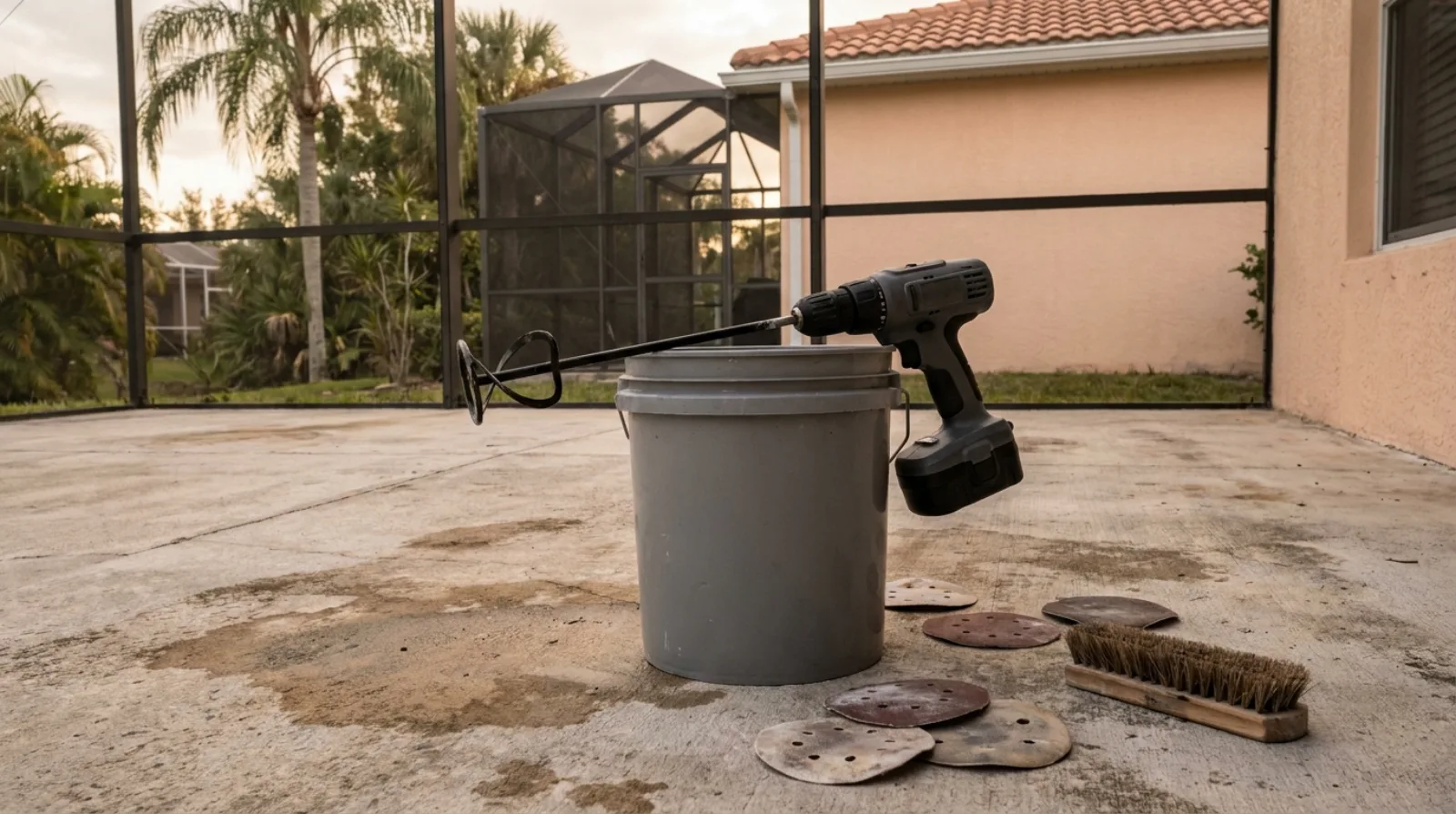
Preparation is most of the job, and most of the proof. Photograph it while it is happening, not just when it is finished.
Build proof before you try to scale traffic
A concrete coating business lives on visible work. Photos matter, but a pile of disconnected before-and-afters is not a sales system. Organize each job so a prospect can understand it quickly: the starting condition, the customer’s concern, the scope, and the finished result.
Use only work you can accurately describe. If you are showing a concept site or a sample garage page, label it as a demo. Do not let a polished mockup look like a completed client job. In a trade where buyers are already worried about bad workmanship, that shortcut costs trust.
For real work, build a simple habit after every completed project. Gather the photos you are permitted to share, save the location at the city level if appropriate, note the surface and scope, and write down the questions the customer asked before hiring you. Those questions become better website copy, estimate notes, short social posts, and review-request language.
A short brand-story film can help a prospect see the crew, the shop standards, and the owner behind the job. But it is not the strategy. It works only when it sits inside the larger path: a person finds you, sees proof relevant to their job, understands the process, and has an easy way to start a conversation.
Make Google and your website agree
Your Google Business Profile and your website should tell the same straightforward story: who you serve, what you do, where you work, and how someone requests an estimate. If one says “flooring” and the other reads like a general construction company, customers and search engines get a muddy signal.
Use your business name, phone number, service area, categories, and hours consistently. Add real project photos and keep the profile current. On the website, make individual pages useful rather than creating a pile of thin city pages. A page about garage floor coatings should explain the job. A service-area page should explain whether you work there and what a local customer can expect.
This does not mean chasing every local-search trick. It means making basic information easy to verify. The broader framework in Contractor SEO: The Parts That Actually Move the Phone applies here: make your services understandable, make your local presence credible, and make the contact path frictionless.
Your website also needs to work for people who were referred by a neighbor. Referrals still check you out. They read reviews, look at photos, and compare how clearly you explain the work. A clean referral can go cold if the site makes the business look inactive or confusing.

The gap between an inquiry and a booked job is usually operational, not creative — someone has to own the next move.
Turn every estimate request into a managed handoff
An inquiry is not a booked job. It is a person who has decided, at least for a moment, that their project is worth discussing. The job now is not “marketing.” It is operational follow-up.
Give your team one intake process. Capture the name, phone, email, address or service area, surface type, approximate size if known, desired timing, and the problem they are trying to solve. Ask for photos when they help, but do not make a person complete a long questionnaire just to get a callback.
Then decide who owns the next move. If you cannot answer a call, a missed-call text-back can acknowledge the inquiry and set the expectation that someone will respond. That is not a magic automation. It is a way to prevent a live prospect from feeling ignored while the crew is on a floor, driving, or handling another customer.
The important part is the handoff after that message. Someone needs to review the request, qualify it, schedule the visit or call, and record the result. If you lose a job, note why: service area, timing, price range, surface condition, or something else. Patterns in those notes tell you what to clarify on the site and where the sales process needs work.
For the wider operating view, read Marketing for Contractors: A System, Not a Campaign. Your lead source, website, review process, and response time cannot be separate hobbies. They have to act like one path.
Ask for reviews as part of finishing the job
Reviews are not a favor you occasionally remember to request. They are proof for the next homeowner who has never met you. The right time to ask is after the customer can see the finished work, has had their questions answered, and knows how to reach you if something comes up.
Make the request simple and personal. Tell them where to leave it. Do not offer incentives, write the review for them, or pressure them to say something specific. A real review in the customer’s own words is more useful than a stack of forced ones.
You can make the task easier with a short text or email that includes the review link. The crew should know who sends it and when. If a customer mentions a concern before the request, deal with the concern first. Asking for public praise while a problem is still open is a bad look and a bad process.
The post How to Get More Google Reviews Without Being Weird goes deeper on the practical workflow. The core idea is simple: make it easy, ask at the right moment, and keep the request tied to a completed customer experience.
Use paid leads carefully, and build what you own at the same time
Lead platforms, directory listings, and paid ads can put opportunities in front of a new business. They can also create a false sense that you have a durable marketing system when you only have a monthly bill and a shared lead queue.
If you buy leads, track them plainly. Record the source, the type of project, whether you made contact, what the person needed, and what happened next. You do not need a complicated dashboard to spot a problem. If a source keeps sending work outside your area or jobs you do not want, adjust it or stop it.
Do not let purchased demand consume all of your attention. Each job should strengthen an asset you control: better job documentation, more reviews, clearer service pages, a healthier Google profile, and referrals that can be followed up with quickly. That is how a business becomes less dependent on whoever sells the next lead.
A concrete coating company does not need to look like a national brand. It needs to be the clearest, most credible choice for the local jobs it is built to do. Pick a focus, explain the work, show honest proof, and make the response process reliable. Then improve the weak link instead of chasing the next shiny channel.
— Creatively Grow, Tampa Bay, FL
Common questions
- Is a concrete coating business a good business to start?
- It can be a practical business if you understand the local demand, price jobs with enough room for preparation and warranty work, and build a repeatable way to earn trust. The coating itself is only part of the offer. Homeowners are also buying confidence that their garage, patio, or commercial floor will be handled correctly.
- How do concrete coating contractors get customers?
- Start with the places customers already use when they need a local contractor: Google, referrals, reviews, neighborhood conversations, and their own previous contacts. Then make every path lead to a clear estimate request and a fast response. Strong job photos, plain explanations, and consistent follow-up give prospects enough proof to call.
- What should a concrete coating website include?
- A useful site shows the jobs you want, explains the surfaces and process in normal language, answers common objections, and gives people a direct way to request an estimate. Include real service areas, contact details, reviews you are allowed to use, and examples labeled accurately. Do not make visitors hunt for the next step.
- Should a new concrete coating business buy leads?
- Purchased leads can help you learn what people ask for and fill gaps, but they are rented attention rather than an owned source of demand. Use them with clear limits. At the same time, build your Google presence, referral process, review requests, and website so each completed job can make the next conversation easier.