
Marketing for dentists should make it easier to choose your practice

Marketing for dentists should make it easier to choose your practice
Marketing for dentists is not a contest to make more noise than the office down the road.
Marketing for dentists works when a local patient can quickly see why your practice fits, find one clear way to book, and get a prompt human response before they call the next office on the map. That means proof, an easy booking path, an accurate Google profile, and reliable follow-up, not a pile of disconnected promotions or discounts.
Start with the decision a patient is trying to make
A person looking for a dentist is usually not looking for “dental marketing.” They are trying to answer a smaller, more urgent set of questions:
- Do you take their insurance or offer a clear payment path?
- Are you close enough to make an appointment realistic?
- Can you help with the reason they searched today?
- Does the office look competent, calm, and organized?
- Can they actually reach someone and get on the schedule?
Your marketing has one job: remove uncertainty around those questions before the patient gives up, gets distracted, or calls the next practice in the map results.
That is why a polished social post by itself rarely fixes the real problem. If the post sends someone to a vague homepage, the phone number is hard to find, the form disappears into an inbox, or the front desk cannot return a missed call until tomorrow, you paid for attention and then dropped it.
Think in a connected path instead:
- Give the person proof that the practice is worth considering.
- Put them on a page or profile that answers the next question.
- Give them one obvious action: call, request an appointment, or ask a question.
- Make sure a real follow-up happens while the decision is still active.
That is a system. A campaign is just one way people enter it.
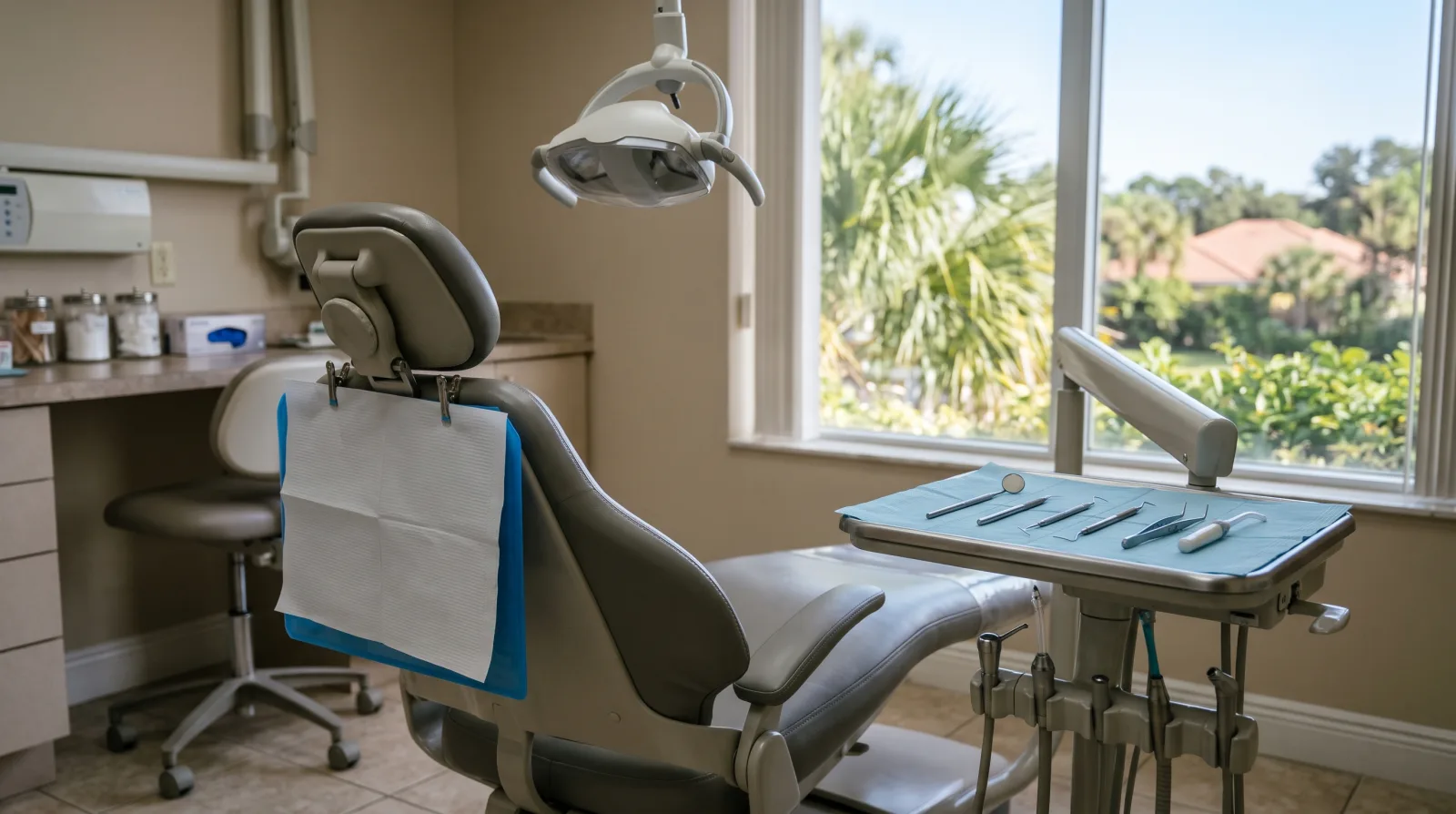 The chair is ready. The question is whether the path to it is.
Make the practice page answer the questions your front desk hears all day
Most dental websites explain what the practice wants to say. A useful page answers what a new patient wants to know before they call.
For a general dental practice, that usually means plain details near the top: who you serve, where you are, how to contact the office, hours, the kinds of visits you handle, and how a new patient gets started. If insurance information is important to your patient base, do not bury it in a PDF or make people call just to learn whether you are in-network. State what you can state clearly, and give them a simple route to confirm the rest.
Service pages should do the same. A page about emergency appointments should explain how to reach the office and what happens next, not make broad clinical promises. A page about implants, orthodontics, or cosmetic work should help someone understand the consultation path, the people involved, and the practical next step. It is marketing when it reduces uncertainty. It becomes filler when it repeats “state-of-the-art care” without showing the patient anything useful.
A short practice film can help here, but it is not the whole answer. It can show the front desk, the doctor introducing the office, the pace of a first visit, and the actual space a nervous patient will walk into. Pair that proof with the boring but necessary things: a working phone link, an appointment request that reaches the right person, current hours, and pages built around the questions patients ask.
Do not use patient footage, stories, or testimonials casually. In healthcare, written consent and a process that respects HIPAA matter. A staff-led explanation of how the office works can build trust without turning a patient’s information into content.
Your Google Business Profile is where the local comparison happens
When someone searches “dentist near me,” they are often comparing the map results before they ever visit a website. Your Google Business Profile needs to make that comparison easy.
Check the operational basics first: practice name, address, phone, hours, appointment link, categories, service areas where relevant, and holiday hours. A wrong phone number or outdated lunch-hour listing is not a minor profile issue; it sends a ready-to-book patient into a dead end.
Then look at the profile as a patient would. Are the photos current and representative of the office? Does the description plainly say what the practice does? Are the services organized in a way that makes sense to a person who is not a dentist? Does the website link land on a useful page rather than a generic homepage?
Reviews belong in this picture because people use them as a proxy for what it feels like to deal with an office. The right way to earn them is boring and repeatable: after an appropriate completed interaction, ask every eligible patient for an honest review through the same simple process. Do not buy reviews, offer incentives tied to positive sentiment, or build a system that screens out anyone who may be unhappy.
Responses need care too. A public reply should never confirm that someone is a patient or reveal details about an appointment, treatment, or condition. A brief, general response and an invitation to contact the office privately is often safer than trying to solve a complaint in public. HIPAA is not a reason to ignore reviews; it is a reason to give the people responding a clear rulebook.
The same local mechanics show up in other businesses that live on calls. In home service marketing, the missed handoff might be a homeowner calling after a water heater fails. In a dental office, it may be someone calling during their work break. Different business, same problem: the lead was real, but no one owned the next step.
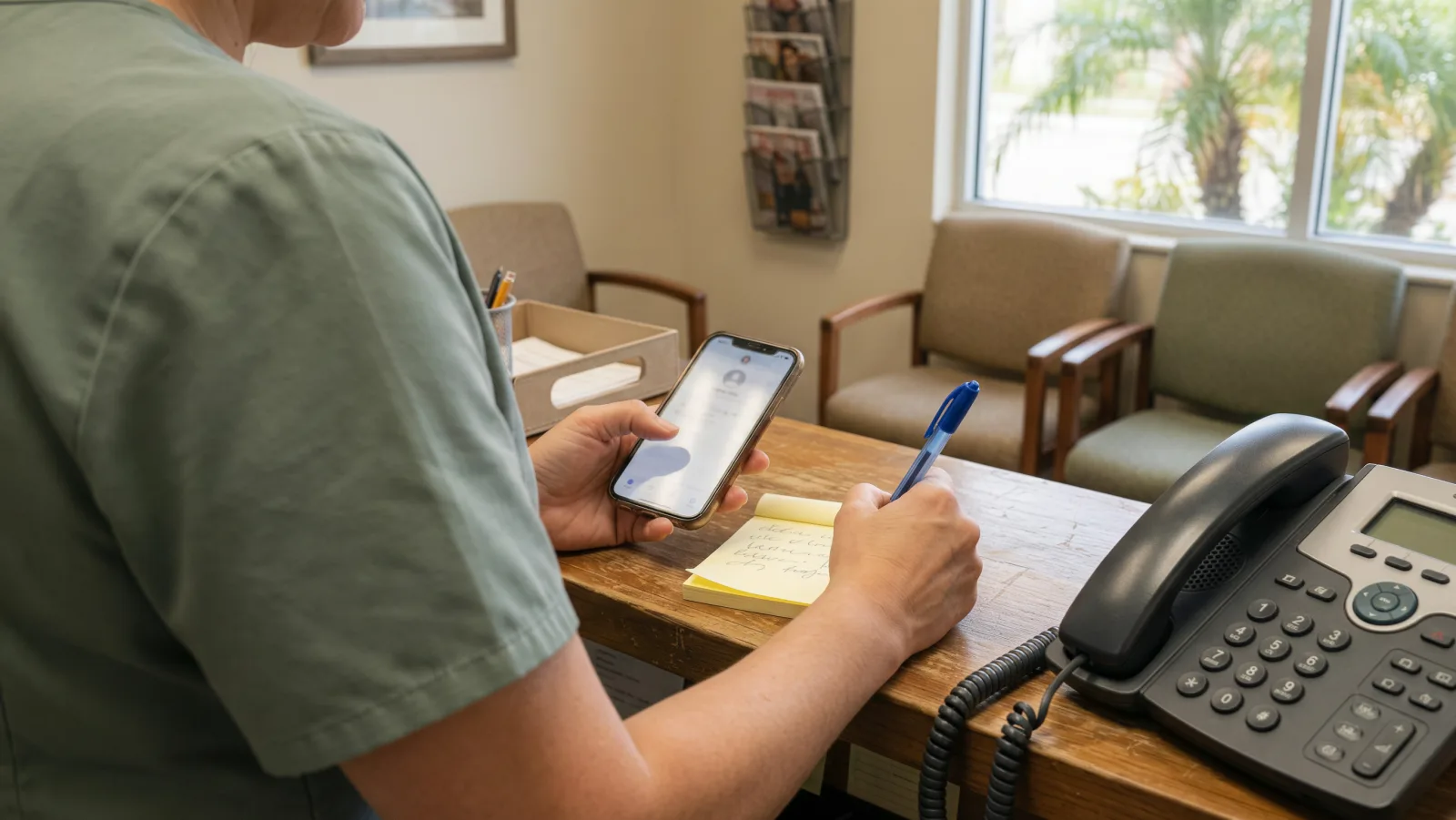 A callback written down is a callback that happens.
The front desk is part of marketing for dentists
It is tempting to separate marketing from operations: one team brings in inquiries, another team handles the phones. Patients do not experience that separation. They experience whether someone answered.
Map the first-contact workflow honestly. What happens when a new patient calls while the front desk is helping someone in person? What happens after a voicemail? Who owns form submissions after hours? Is there a standard way to record what the caller needed and schedule a callback? Can the person calling tell whether they reached the right office?
You do not need a complicated automation project to answer those questions. You need an agreed process and someone accountable for it. A missed-call text-back can acknowledge that the office was unable to answer and give the caller a route to reconnect, as long as the message stays administrative and does not solicit or contain protected health information. Have your privacy and compliance advisers review the workflow, vendor agreements, message content, and any call-recording practices before putting it in use.
The goal is not to make a dental office sound like a call center. It is to keep a patient from reaching a silent voicemail at the exact moment they decided to seek care.
Do not let social media become the whole plan
Social can be useful for familiarizing local people with the practice, the team, office updates, and common non-clinical questions. It is not a substitute for a clear booking path.
If you post, use it to point back to something useful: a new-patient page, an accurate appointment route, an office update, or a staff introduction that lowers the barrier to a first call. Avoid treating it as a clinical advice channel. A comment thread is a poor place to discuss someone’s symptoms, treatment, or personal history.
The better question is not “How often should we post?” It is “What should happen when a local person becomes interested?” If the answer is fuzzy, publishing more content only makes the fuzzier process busier.
That is also why local marketing should not be confused with constantly chasing the newest platform. The useful work is often unglamorous: fix the booking link, make the office details match everywhere, make calls traceable, ask for honest reviews consistently, and give the person on the phone enough information to help a new patient take the next step.
Track the handoffs, not vanity activity
You do not need invented return-on-investment numbers to tell whether the system is working. Track the points where a prospective patient can fall out:
- Calls answered, missed, and returned
- Appointment requests received and contacted
- Requests that became scheduled visits
- No-shows and cancellations, where appropriate for your operations
- Sources patients report when they book
- Review requests sent and reviews received
The point is not to turn every conversation into a spreadsheet. It is to stop guessing. If calls are coming in but few appointments are booked, the issue may be the front-desk workflow or the information people receive after calling. If the profile gets attention but people leave quickly, check whether the details and website destination answer their question. If a service page gets visits but no inquiries, it may be too abstract or lack a clear next step.
This is the same discipline behind how to get more Google reviews: build a process people can actually repeat, instead of waiting for a lucky burst of activity. The evidence is in the handoff, not in a report full of impressions.
Build the system before you buy more attention
Paid ads, local search work, referral relationships, and community visibility can all have a place. But do not buy more traffic into a process that loses people at the phone, the form, or the first page they see.
Start with a simple audit. Call the practice number from a new-patient perspective. Submit the website form. Open the Google profile on a phone. Look at the landing page for the service you most want to grow. Then ask the front desk what happens after each action. You will find the gaps faster that way than in a marketing brainstorm.
Marketing for dentists gets simpler when you stop treating it as a collection of channels. Prove that the practice is a credible choice. Capture the person’s intent with a clear next step. Follow up while the choice is still being made. Everything else should support those three things.
— Creatively Grow, Tampa Bay, FL
Common questions
- What marketing works best for a dental practice?
- The useful mix is the one that makes a local patient comfortable choosing you and able to book without friction: a clear practice page, an accurate Google Business Profile, appropriate reviews, and a reliable response when someone calls or submits a form. The exact channel matters less than the handoff between them.
- Should a dentist use discounts to get new patients?
- A discount can fill a short-term gap, but it is not a positioning system. Start by making the practice, services, location, insurance information, and booking process clear. Patients who understand why they should choose you are less likely to make their decision on the first coupon they see.
- Can dental practices ask patients for Google reviews?
- Yes, a practice can invite patients to leave an honest review, but it should not pressure them or steer only happy patients toward review requests. Keep protected health information out of the request and response process. Get written permission before using any patient story, photo, or testimonial in marketing.
- Does HIPAA prevent dental marketing?
- No. HIPAA does not prohibit marketing a dental practice, but it does limit how protected health information can be used and disclosed. Use a HIPAA-aware process for review replies, texting, call recordings, and patient stories; confirm the details with your privacy and compliance advisers.