
Plumbing marketing for emergency and planned work
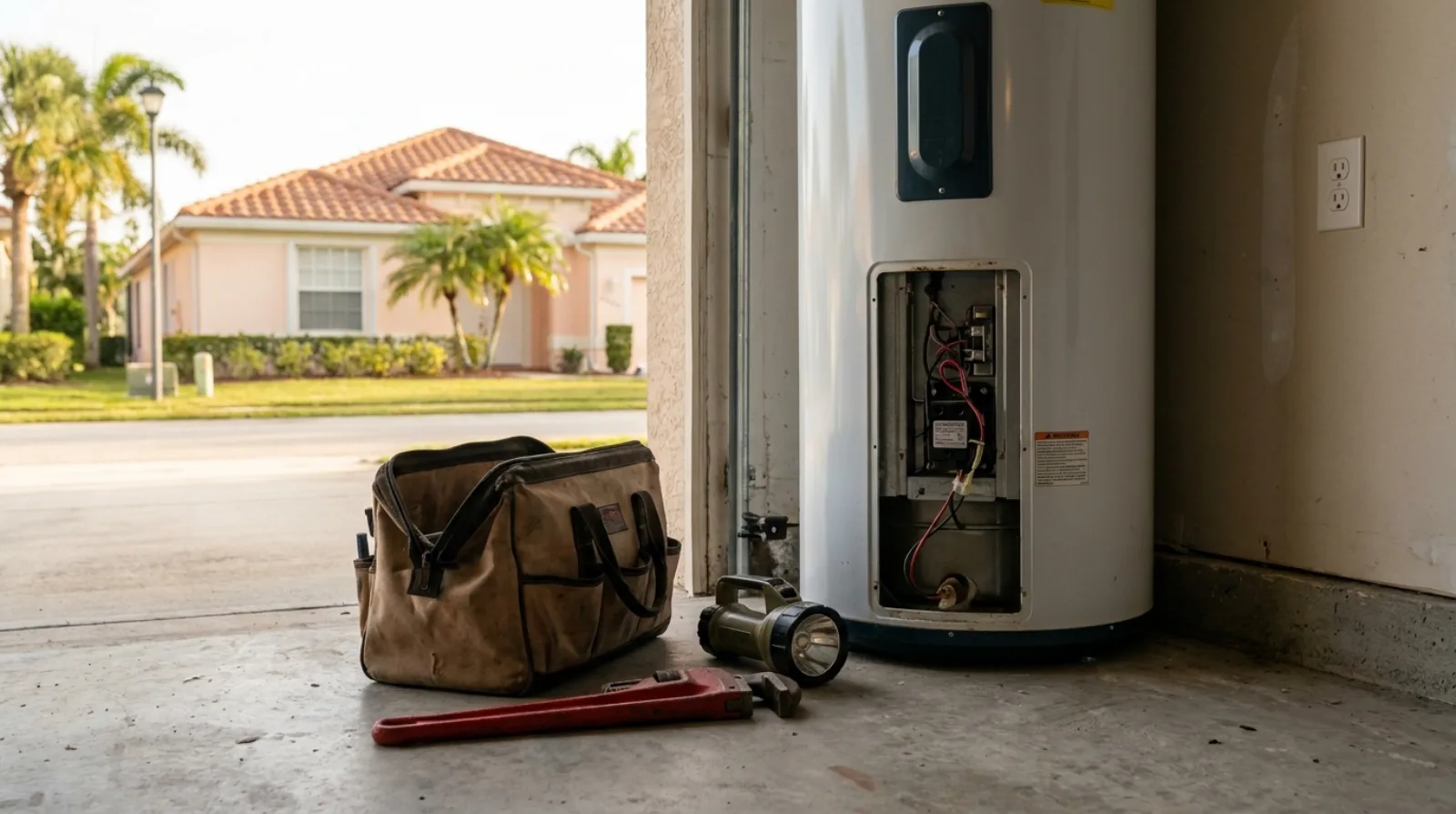
Plumbing marketing for emergency and planned work
Plumbing marketing works when an urgent caller gets a clear response and a planned-project customer gets a clear reason to trust you. The same company can handle both, but the customer paths cannot be identical. Build around the problem they have, the proof they need, and what your office can actually do next.
A plumbing company lives in two different buying situations. One homeowner has water where it should not be, a stopped drain, or no hot water. They are trying to reach someone capable before the problem gets worse. Another is planning a bathroom, replacing fixtures, or figuring out whether a house can support a renovation. They have more time, but more questions.
Whether they find you through a map listing, referral, or review, both care whether the number works and the next step is credible.
Do not send every plumbing customer down the same path
A generic page that says you do “all plumbing services” makes the visitor do your sorting for you. That is a poor first experience when someone is standing beside a leaking water heater or trying to plan work around a bathroom remodel.
Organize your site, listing information, and intake around the work you truly perform. That might include repair and troubleshooting, drain work, water heaters, leak detection, fixture replacement, repiping, sewer-related work, or renovation plumbing. Be specific about service areas and business hours. If a service depends on licensing, equipment, inspection, or an on-site evaluation, say so plainly.
Then give the two major customer types different routes.
For an urgent issue, the route should answer practical questions:
- Is this the right number to call?
- What details should the customer share now?
- What should they expect after a missed call or form submission?
- Is there anything safe they should do while waiting, without attempting a repair they are not qualified to make?
- What does your company need to confirm before a visit is scheduled?
For a planned project, the route should slow down enough to be useful. A homeowner considering a bathroom remodel may need to know whether you offer a site visit, how you develop scope, what decisions affect the work, and who coordinates with other trades. They do not need an emergency-style page pushing them to act as if a pipe just burst.
This is respect for the reason someone contacted you, not complicated segmentation. An epoxy flooring installer has the same issue. A garage owner comparing concrete coatings and a homeowner association manager planning a common-area surface have different constraints. One may be concerned about preparation and downtime; the other may need phasing and access planning.
For the wider framework, read marketing for contractors. The channel is not the system. The system is what the customer experiences from the first search through the completed job.
Make local search match the way you answer the phone
Local visibility is often the front door for plumbing work. Your Google Business Profile, website, contact details, listed hours, services, and review profile should tell a consistent story. If the listing says one thing, the website says another, and the office cannot explain the difference, you have created doubt before a technician is involved.
Test the customer path as an operational check. Search for the work you want in the towns you serve, call the published number, and submit the form. An urgent customer should know what happens next; a remodel customer should get a route that fits the project.
Look for gaps that are not search problems: an unmonitored number, an outdated service page, or a form that sits unread. More traffic only sends more people into the same broken handoff.
The durable mechanics are covered in contractor SEO. Useful service pages, accurate local information, and evidence that fits the customer’s question are more valuable than trying to manufacture a shortcut in search results.
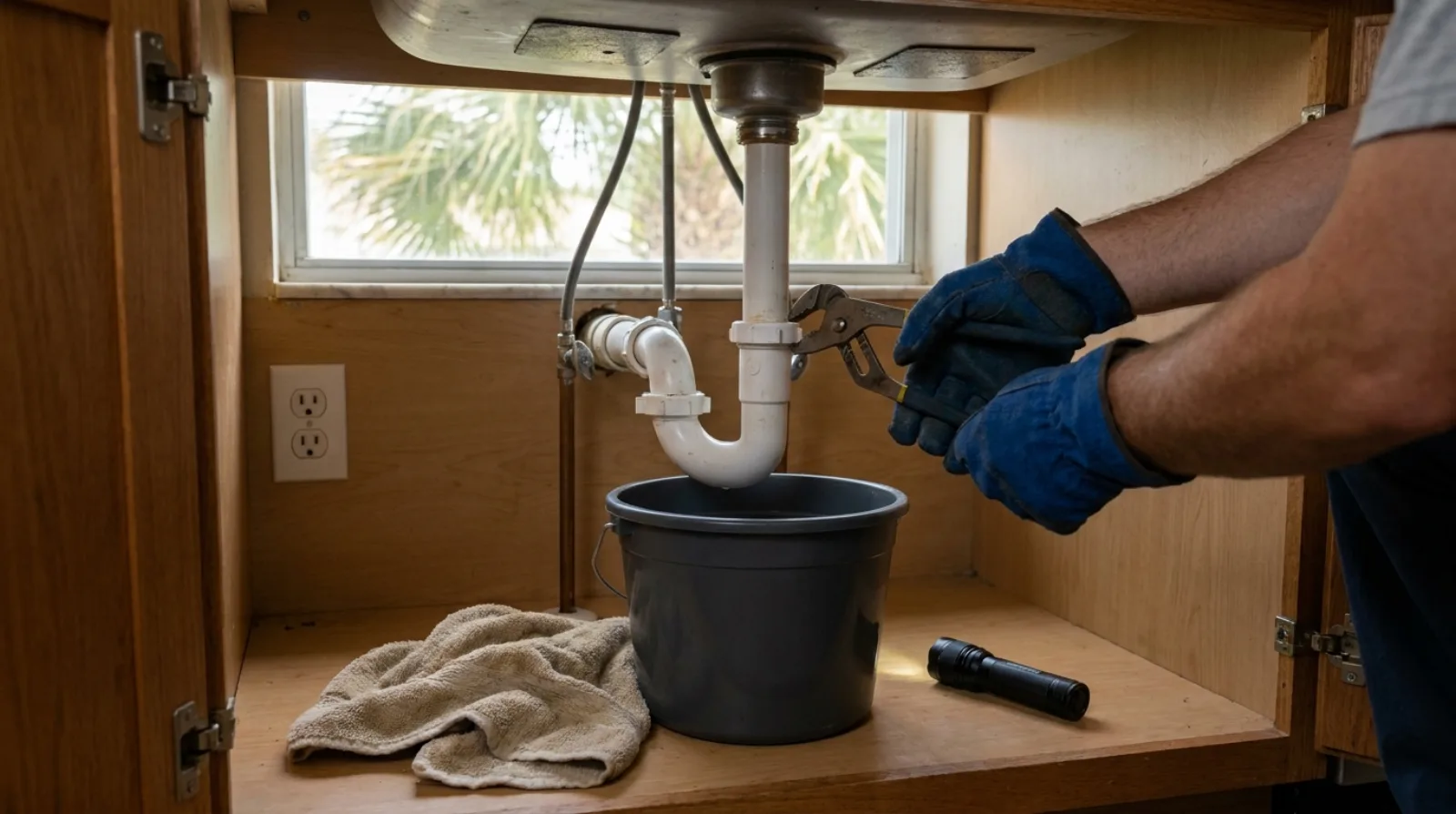 The urgent call: the customer needs a response they can count on before anyone touches a wrench.
Emergency plumbing marketing has to be honest about urgency
When a caller is worried about active damage or lost service, vague language feels like a dodge. They need an obvious way to contact you, a person who can capture the essentials, and a realistic expectation of the next communication.
Do not confuse that with making promises you cannot keep. If dispatch has to confirm availability, say that. If the technician has to inspect the situation before discussing a repair path, say that too. “We will take your details and confirm the next available step” is more useful than an unsupported guarantee about arrival, price, or diagnosis.
A missed-call text-back is one practical bridge when the crew is in the field. It can acknowledge that the caller reached out, ask for the address and basic problem if appropriate, and tell them what happens next. It does not replace a conversation. It makes sure the customer is not left wondering whether the company received the call.
Your intake should carry the right details forward: the contact information, address, the reported issue, timing concern, access constraints, and any facts that help the technician prepare. The office should not make the customer repeat the whole story when the technician arrives. The technician should not have to guess what was promised.
That handoff is part of the product. The ad, listing, or referral got attention; the response decides whether your company feels dependable. Electricians face the same split between the quick repair and the bigger job, covered in electrician marketing that fills the schedule.
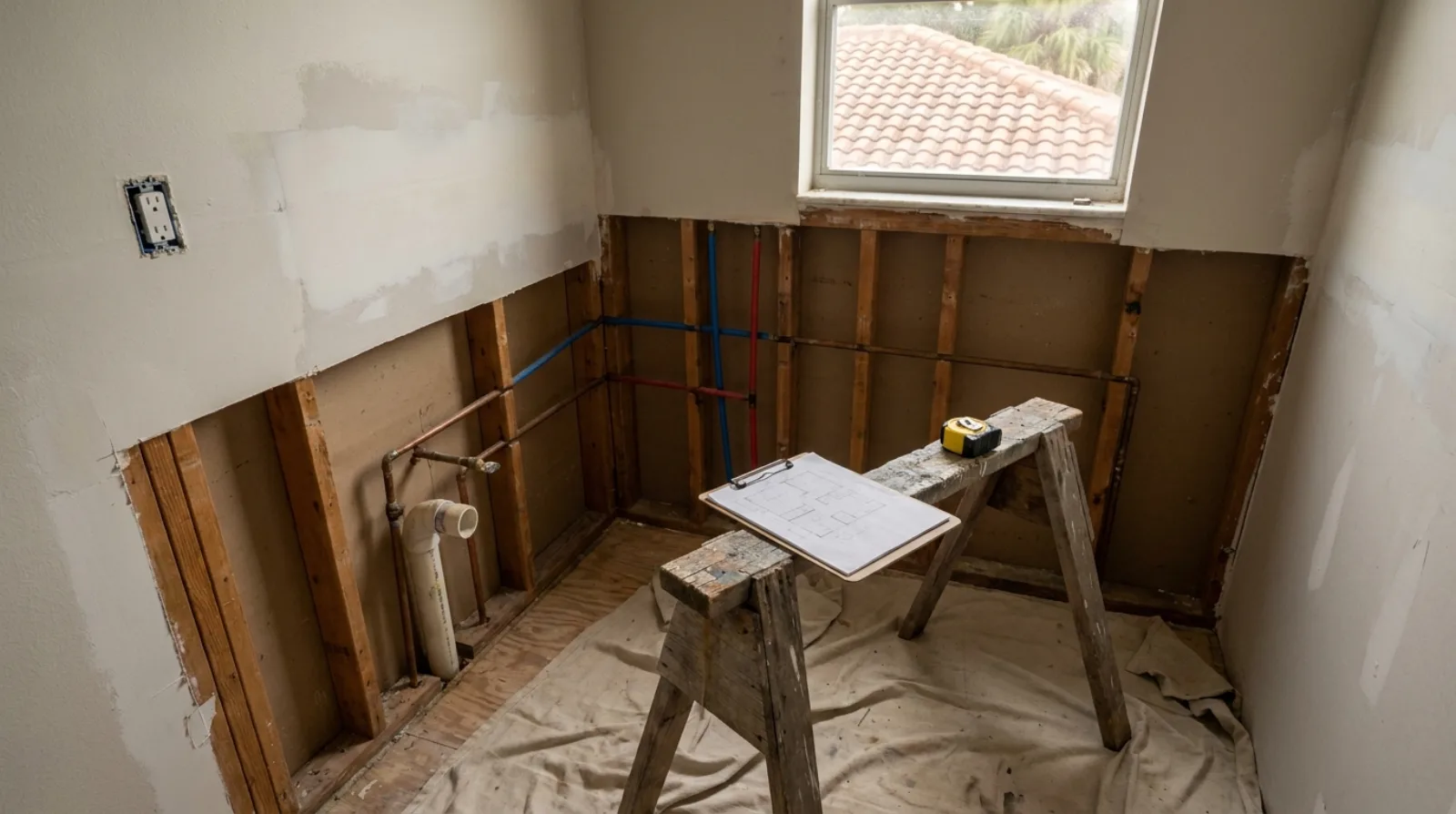 The planned project: more time to decide, and more questions that deserve straight answers.
Planned plumbing work needs proof, not pressure
A planned project has a longer decision cycle, but it is still a trust purchase. A homeowner may not know what is behind the wall, what fixture choices change the scope, or where a permit or inspection fits. They are choosing someone who can explain the work without treating every question as an obstacle to a quick close.
Give them proof that helps them judge the actual experience of working with you:
- Clear service descriptions that distinguish repair work from renovation or replacement work.
- A plain explanation of the inspection, estimate, or scope process.
- Reviews that mention communication, care, and explanation in the customer’s own words.
- Real photos or short walkthroughs of work you are allowed to show, with context about what the customer is looking at.
- Current licensing, insurance, credentials, or financing information only where it applies.
Skip trophy-shelf proof: generic claims, unexplained badges, or a gallery with no hint of the problem solved. Put the proof near the decision it supports. A water-heater page can explain what an assessment covers. A renovation page can explain how you coordinate the plumbing side with the rest of the work. A repair page can help the customer understand what information is useful before a visit.
Pool cage work offers a useful parallel. A homeowner is not choosing screen material in the abstract. They are trying to decide who can make the outdoor area usable again, explain the scope, and handle the job without adding confusion. The company that makes the process visible is easier to choose than the company that only declares itself the best.
Let the completed service create the next conversation
Emergency repairs and planned installations should both end with a clean handoff. The customer needs to know what was done, what was observed, and whether there is a distinct next step. Your office needs to know whether the job is complete, requires a return visit, needs an estimate, or should move into a future-project conversation.
Do not turn every repair into a forced pitch. A concise service summary can document the reported issue, the completed work, and any separate condition worth attention: what was observed, why it matters, and whether it needs immediate action or can be planned. If another project makes sense, give the customer one direct next step: schedule an assessment, request an estimate, or keep the information for later.
The same discipline works in high-consideration contractor work. A pool enclosure prospect may call first about one damaged panel, then later need a larger repair or rebuild conversation. The right approach is to solve the stated problem, document what matters, and let trust earn the next discussion.
Build follow-up around real events, not marketing noise
Good follow-up does not need to sound like a campaign. It can confirm a scheduled visit, answer a question after an estimate, let a customer know a part is in, or check that a completed service reached a clear endpoint. Each message should have a reason tied to real work.
Decide who owns each handoff. Someone should monitor calls and forms. Someone should confirm the next step. Someone should close the loop after a job or estimate. When those responsibilities are vague, a lead can look active in a spreadsheet while the homeowner waits without an answer.
That is why fast follow-up belongs in plumbing marketing, even though it is an operations habit. The customer does not separate your website from your scheduling process. They see one company. If the company makes it easy to get an answer, keeps its word about the next contact, and communicates clearly when circumstances change, the marketing claim has substance.
Home improvement leads that don't go cold explains the practical problem: an inquiry is not a result. A response and an agreed next step are what keep a good opportunity from going stale.
Ask for reviews after the customer can judge the experience
Reviews are public evidence of the process you created. Ask after a real service moment the customer can evaluate: the repair is complete, the crew cleaned up, the explanation made sense, or a project reached a meaningful milestone.
Keep the request direct and simple. Do not write the review for the customer or ask them to use particular language. An honest account of communication, arrival, care, and finished work is what the next plumbing customer is trying to learn.
Read reviews as operational feedback, not just social proof. Repeated praise for clear explanations tells you what to protect. Repeated frustration about scheduling, surprises, or unanswered calls shows you where the path needs work before you seek more public praise.
For the practical review process, see how to get more Google reviews without being weird. The goal is not to manufacture enthusiasm. It is to make a reasonable request after real work and make it easy for a satisfied customer to respond.
Plumbing marketing is not one message for every job. It is a reliable path for the person who needs help now and the person trying to plan carefully. Make the right path obvious, back it up with a process your team can deliver, and the marketing will have something real behind it.
— Creatively Grow, Tampa Bay, FL
Common questions
- What is the most important part of plumbing marketing?
- Make the path from a local search or referral to a real next step clear. An urgent caller needs to know how to reach you and what happens after contact. A planned-project customer needs proof that you understand the work, a sensible inspection process, and follow-up that does not vanish.
- How should a plumber market emergency work?
- Be accurate about availability, service area, and the kind of problems you handle. Make the phone route obvious, return missed calls quickly, and give the customer a clear expectation for the next contact. Do not use an emergency page to promise an arrival time or a diagnosis your team cannot support.
- Should a plumbing company have separate pages for repairs and remodels?
- Usually, yes. A homeowner with an active leak is making a different decision from someone planning a bathroom renovation. Separate pages let each person see relevant services, the information to provide, and the right next step without making either customer dig through a generic list.
- Do Google reviews help plumbing companies?
- They help when they describe the parts of the experience a new customer cannot see before booking: communication, arrival, explanation, respect for the home, and completed work. Ask after a real service moment, make the request simple, and never tell customers what to write.