
Auto repair marketing turns a breakdown into a regular customer
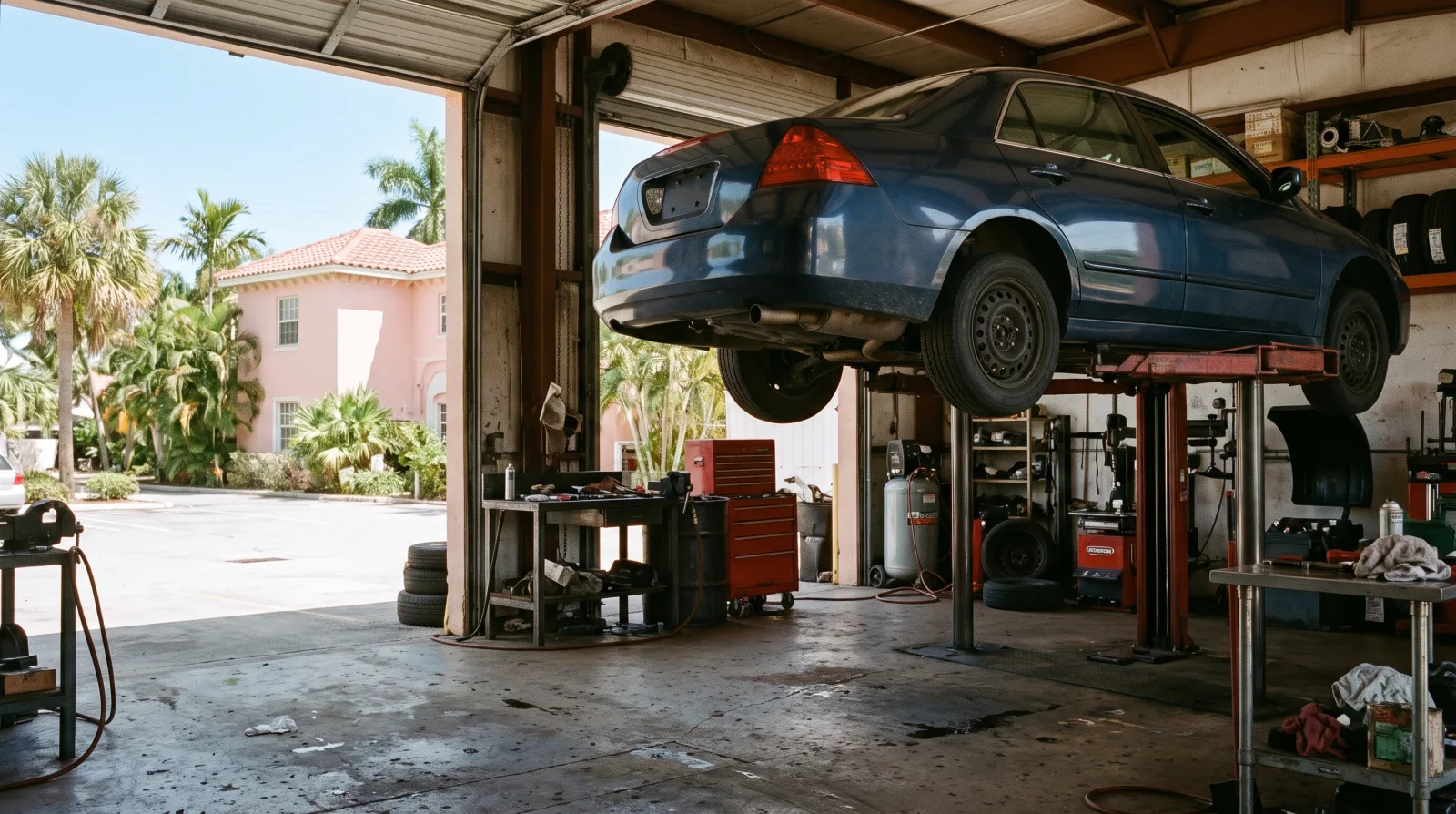
Auto repair marketing turns a breakdown into a regular customer
Auto repair marketing works when a worried driver can find your shop, trust what they see, reach a real person, and remember you after the repair. It is a clear path from search to a booked job and a second visit. Build that path before you spend more to chase attention.
A driver usually does not wake up wanting to discover a new repair shop. Something changed: a warning light came on, the car will not start, the brakes feel wrong, or a familiar shop cannot see them soon enough. They search from a phone, skim a map listing, look for signs that you handle their problem, and decide whether calling feels worth the trouble.
That is the job. Not “be everywhere.” Make the next step obvious when the driver needs it.
Start with the moment the driver is in
A shop can serve several kinds of customers, but they do not arrive with the same urgency.
Someone with a dead battery wants to know whether they can get help today. A parent hearing a brake noise wants confidence that the shop will explain the issue plainly. A fleet manager may need a reliable process for recurring service. A driver planning a major repair has more time to compare options, but also more reasons to hesitate.
Your marketing should not talk to all of them in one vague paragraph. Give each high-value service a clear home: a page or section that says what you work on, what the first contact looks like, where the shop is, and how to reach you. Avoid pretending to diagnose a vehicle online. The point is to reduce uncertainty about the shop, not to replace an inspection.
This is the same reason plumbing marketing for emergency and planned work needs different paths for a burst pipe and a scheduled project. Urgency changes what a person needs to see before they call.
Make the map listing match the front counter
For many local searches, your Google Business Profile is the first version of your business the driver sees. Treat it like the front counter, not a directory entry you set up once and forget.
Check the basics regularly:
- The shop name, phone number, address, hours, and website are accurate.
- Holiday or special hours are updated before a customer makes a wasted trip.
- The listed categories and services describe work you actually perform.
- Photos show the facility, staff, bays, or process honestly rather than generic car imagery.
- The route from the profile to calling, booking, or requesting service works on a phone.
Accuracy matters because repair work already asks for trust. If a driver finds one closing time on Maps and another on the website, they have a reason to move on. If the profile leads to a page with no phone number near the top, you made a simple decision harder than it had to be.
Do not confuse activity with usefulness. An occasional update about a seasonal inspection or a service you provide can help a customer understand the shop. It cannot compensate for wrong hours, unanswered calls, or a page that gives no clear next step.
Show proof before asking for the call
Most auto shops say some version of “honest, quality service.” Drivers have heard it before. Proof is more useful than adjectives.
Show how the shop works. Explain what happens when a customer brings in a car: check-in, inspection, estimate, authorization, repair, and pickup. State what you do and do not handle. Introduce the people who answer the phone or work on vehicles. A short brand story film can help a driver see the real shop and hear the owner explain the standard, but it is one piece of proof, not the whole marketing plan.
Reviews belong in this part of the system too. Ask for feedback after a completed visit through a consistent, low-pressure process. Do not buy reviews, gate feedback, or put words in a customer's mouth. Reply as a business owner would at the counter: thank the customer, address the concern carefully, and do not reveal account details or argue in public.
The practical lesson from how to get more Google reviews without being weird applies here: make the request part of the closeout process, not a desperate blast when the calendar is empty.
A missed call is a broken handoff, not bad luck
The service advisor may be checking in a tow, explaining an estimate, or handling a customer at the desk when the phone rings. That is normal. Leaving a prospective customer with nothing after they call is not a marketing strategy.
Map the handoff. Who sees missed calls? Is there a standard response? Can the team tell whether the person needed towing guidance, a routine appointment, or an update on an existing repair? When does someone call back? These are operations questions, but they determine whether marketing turns into a conversation.
A missed-call text-back can acknowledge the call and invite the customer to continue by text or call again. Keep it useful and truthful. Do not promise availability the shop has not confirmed. Do not diagnose a repair by text. And do not let a fast first message become a substitute for an owner who follows through.
The goal is simple: preserve the customer's intent while they are still looking for help. That is more valuable than spending on another promotion that sends the same unanswered calls to the same busy line.
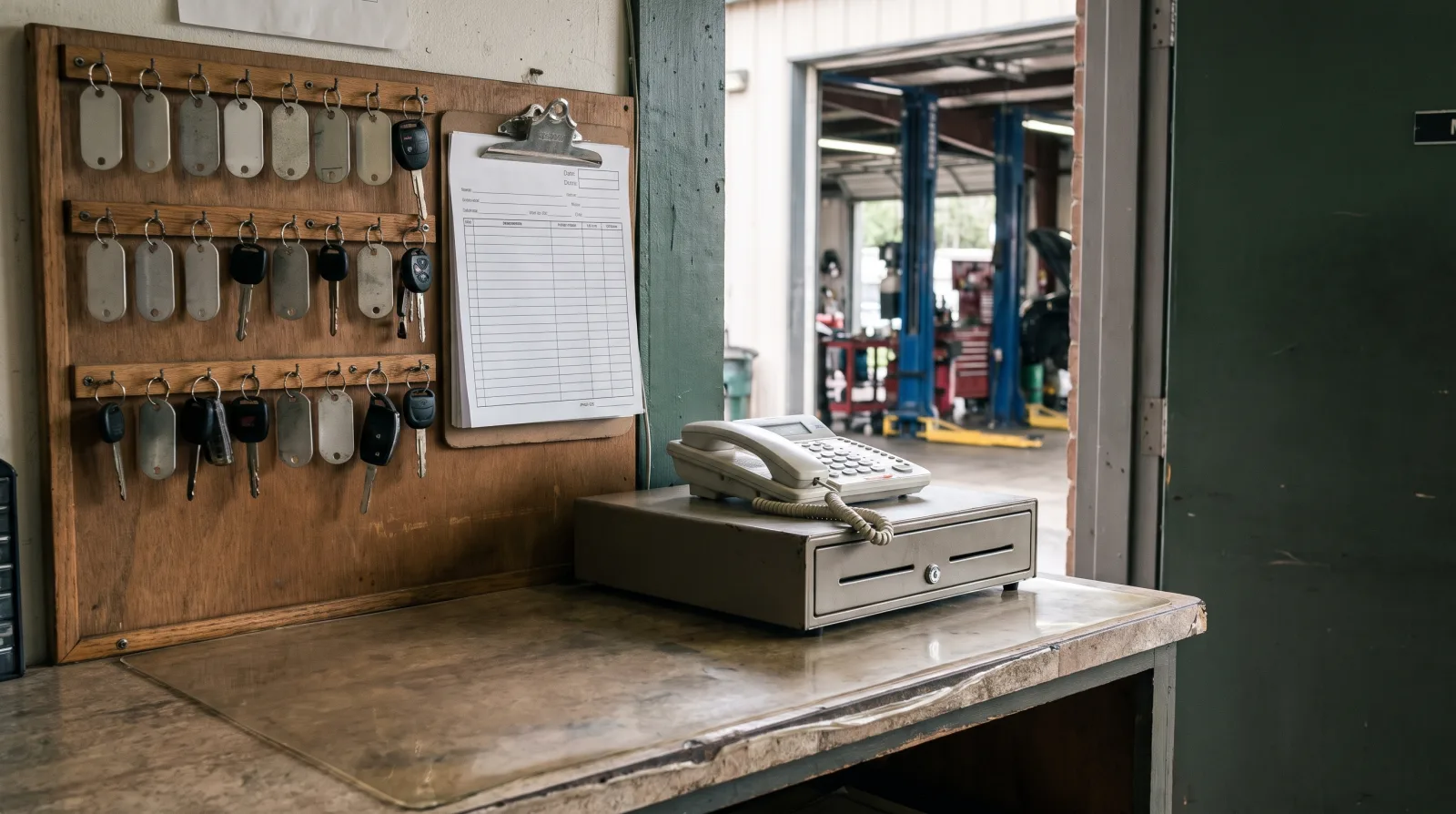 The counter is where a call becomes a customer.
Give every source one next step
A postcard, a local sponsorship, a referral, a search result, and a social post do not need separate marketing systems. They need to lead to the same dependable path.
For example, a driver who sees a post about your pre-trip inspection should be able to tap through to a page with current hours, a phone number, and a clear request option. A referral should get the same straight explanation at the counter as someone who found you on Google. A customer who calls after hours should not be left wondering whether anyone saw the attempt.
That is the useful part of a system. Each source may start the conversation differently, but the business handles the conversation consistently. The broader approach in home service marketing works when every channel leads to the same next step is just as relevant to a repair bay as it is to a contractor's truck.
Do not create a different offer for every channel unless the shop can actually deliver and track it. A confusing collection of discounts can train customers to wait for the next deal while giving your team more exceptions to manage. Clear service, clear communication, and a reachable shop are a stronger base.
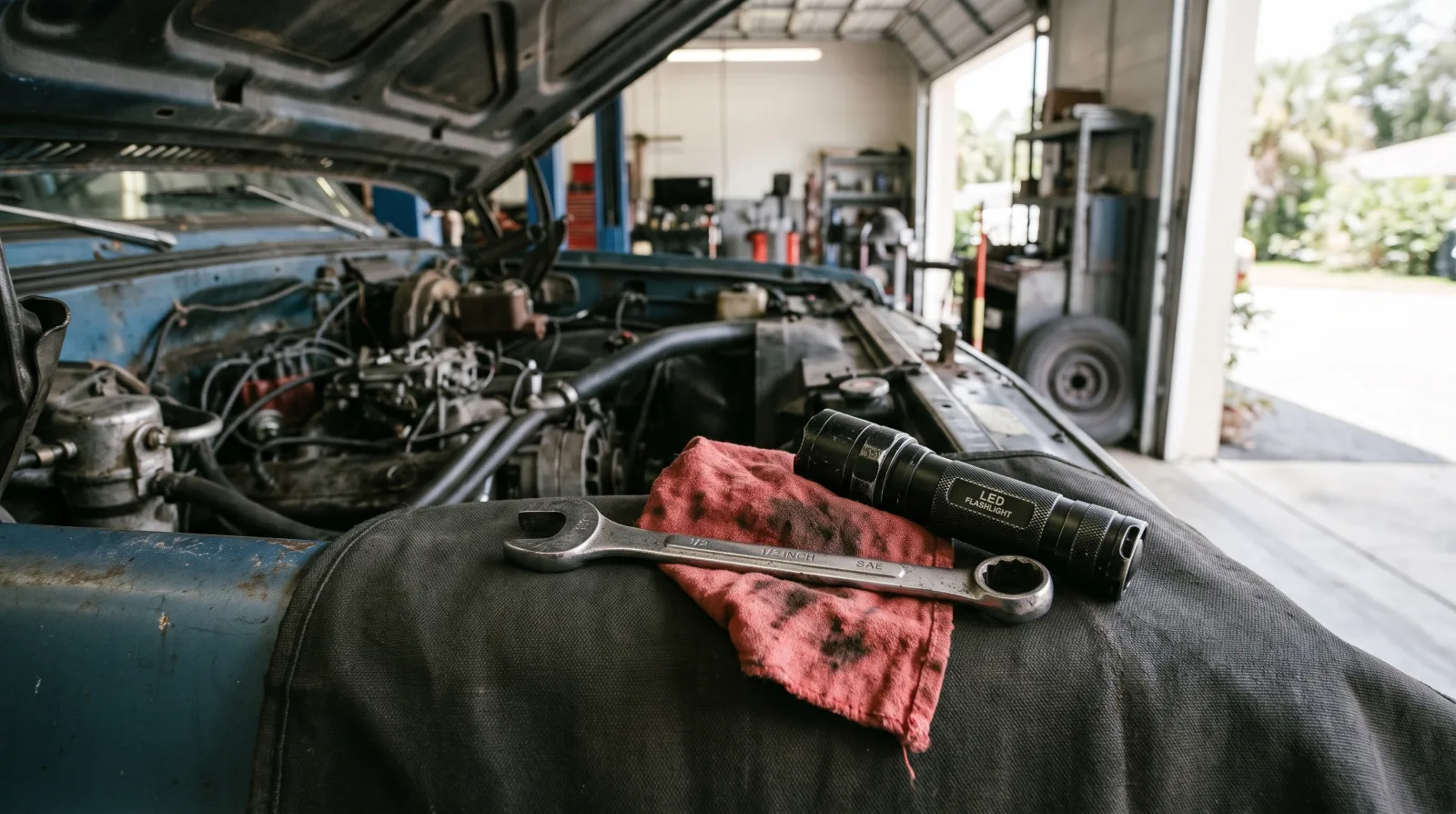 The second visit gets earned during the first one.
Turn the completed repair into the next visit
The first repair is not automatically the start of a relationship. A customer may leave relieved and still forget your name the next time a light appears on the dash.
Your follow-up should earn the second visit. Send the receipt and any promised notes promptly. Make it easy to save the shop's contact information. Where it is appropriate, remind the customer about a stated maintenance need or an inspection schedule you discussed. Keep the message about their vehicle and the service relationship, not a generic sales blast.
The front desk can help here. When a customer checks out, the team should know what was explained, whether a future item was noted, and how the customer prefers to be contacted. That does not require a complicated automation project. It requires a shared process that does not disappear once payment clears.
If you text customers, get the right consent for the type of message you send and use a process that respects applicable communication rules. Transactional updates, appointment coordination, and promotional messages are not all the same thing. When in doubt, get guidance for your specific setup rather than treating every phone number as permission to market.
Measure handoffs, not vanity
A growing follower count does not tell you whether a driver reached the shop. Instead, review the points where intent can disappear.
Look at calls and requests that came in, whether the team connected with them, what kinds of service people asked about, and where common questions are not answered clearly. Listen for the same friction at the counter: customers who could not find the entrance, thought you did a service you do not offer, or arrived expecting a time that was never confirmed.
Then fix one handoff at a time. Update the profile. Rewrite the service page. Clarify the booking language. Set a missed-call owner. Improve the estimate explanation. The work is unglamorous, which is why it works better than adding another channel every time the schedule softens.
Good auto repair marketing makes the shop easier to choose and easier to return to. It does not promise that every breakdown becomes a lifelong customer. It builds the conditions where a driver can see real proof, reach a real person, get a straight answer, and remember who helped when the next problem arrives.
— Creatively Grow, Tampa Bay, FL
Common questions
- What is the first thing an auto shop should fix in its marketing?
- Start with the path between a driver's search and a real conversation. Make sure the shop's Google Business Profile, website phone number, service pages, hours, and booking path agree. Then make it easy for someone who calls during a busy moment to get a prompt, useful response rather than silence.
- Do auto repair shops need a new website to market better?
- Not always. A shop needs a site that answers the question a driver has right now: whether you handle the problem, where you are, when to call, and what happens next. If the current site cannot do that on a phone, repair the customer path before adding more traffic.
- How should an auto repair shop ask for Google reviews?
- Ask after the work is complete and the customer has had a chance to understand what was fixed. Make the request simple and voluntary. Do not script a positive review or offer an incentive for one. Respond professionally to feedback, including criticism, without discussing private customer details.
- What should a shop do with missed calls?
- Decide who owns the response, what the customer receives, and when the team follows up. A text-back can acknowledge the missed call and offer a way to continue the conversation, but it should not diagnose a vehicle or imply an appointment is confirmed when it is not.