
Restaurant marketing that isn't just posting food photos
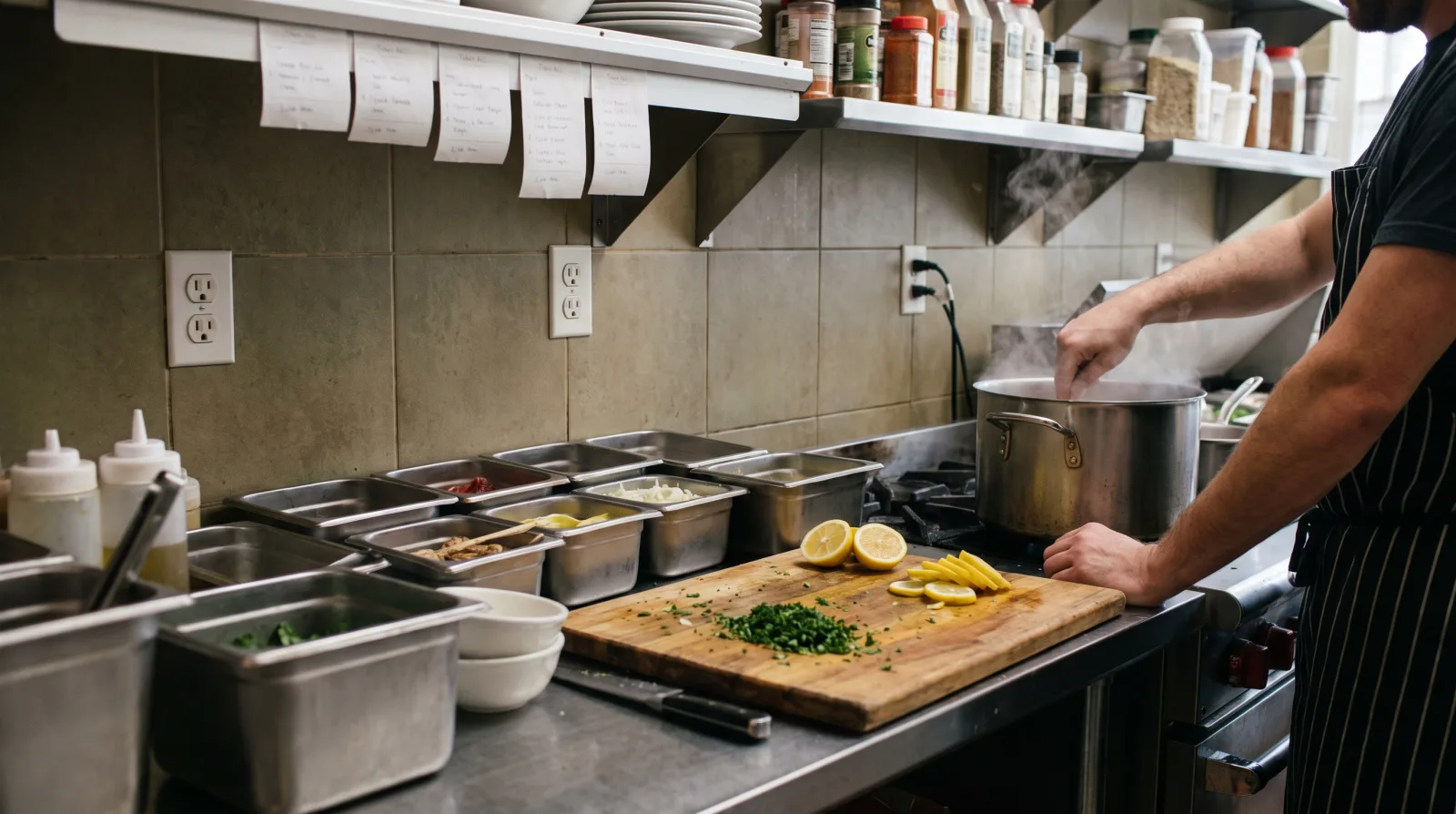
Restaurant marketing that isn't just posting food photos
Restaurant marketing is not a contest to make every plate look perfect online. It is the work of making a hungry person trust you, find you, choose you, and have a reason to return. That means the menu, Google listing, reviews, calls, reservations, and in-person experience all tell the same true story, so a guest who finds you on a phone can answer their questions and book without guessing.
Food photos are proof, not the whole plan
A good food photo does a useful job. It gives a person evidence that the dish they are considering is real, cared for, and worth ordering. A short kitchen video can do the same thing: show the hands, the heat, the neighborhood, or the personality behind a place.
But a photo does not answer the questions that decide a visit:
- Are you open when I can go?
- Where do I park?
- Is this a fast lunch, a date-night table, a family dinner, or a place for takeout?
- What does the menu actually include?
- Can I book, order, or ask a question without hunting around?
- Will the experience match the promise?
If a guest sees a dish on Instagram, searches your name, and lands on a stale menu or a Google listing with the wrong hours, the marketing broke after the attention was earned. The point is not to publish more content. The point is to remove the reasons a ready-to-buy guest walks away.
That is why restaurant marketing has to be a connected path, not a stack of disconnected posts.
Start where diners make the decision
Most restaurants have several kinds of demand. Someone may be searching for a cuisine near them. Someone else is checking a recommendation from a friend. A regular may be deciding whether tonight is the night to order again. A group organizer may be looking for a private room or catering.
Each of those people needs different details, but they should encounter one consistent story.
Your Google Business Profile is often the first practical stop. Treat it like a working front door, not a profile you filled out once. Keep the primary category, hours, holiday hours, phone number, address or service area, website, ordering links, reservation links, and menu link accurate. Add current photos that help people recognize the room and food they will actually get. Read the questions and reviews there; they are a plain-language list of what guests still cannot figure out.
The same standard applies to your site. A diner should not have to decode a PDF from years ago to see the menu on a phone. A catering lead should not need to guess whether you serve their group size. If a popular dish is seasonal, say so. If the kitchen closes before the bar, say so. Clear information is marketing because it makes the decision safer.
This is the same local-business problem covered in home service marketing: every channel should lead to the same next step. Restaurants simply feel the failure faster because the guest can choose another table in seconds.
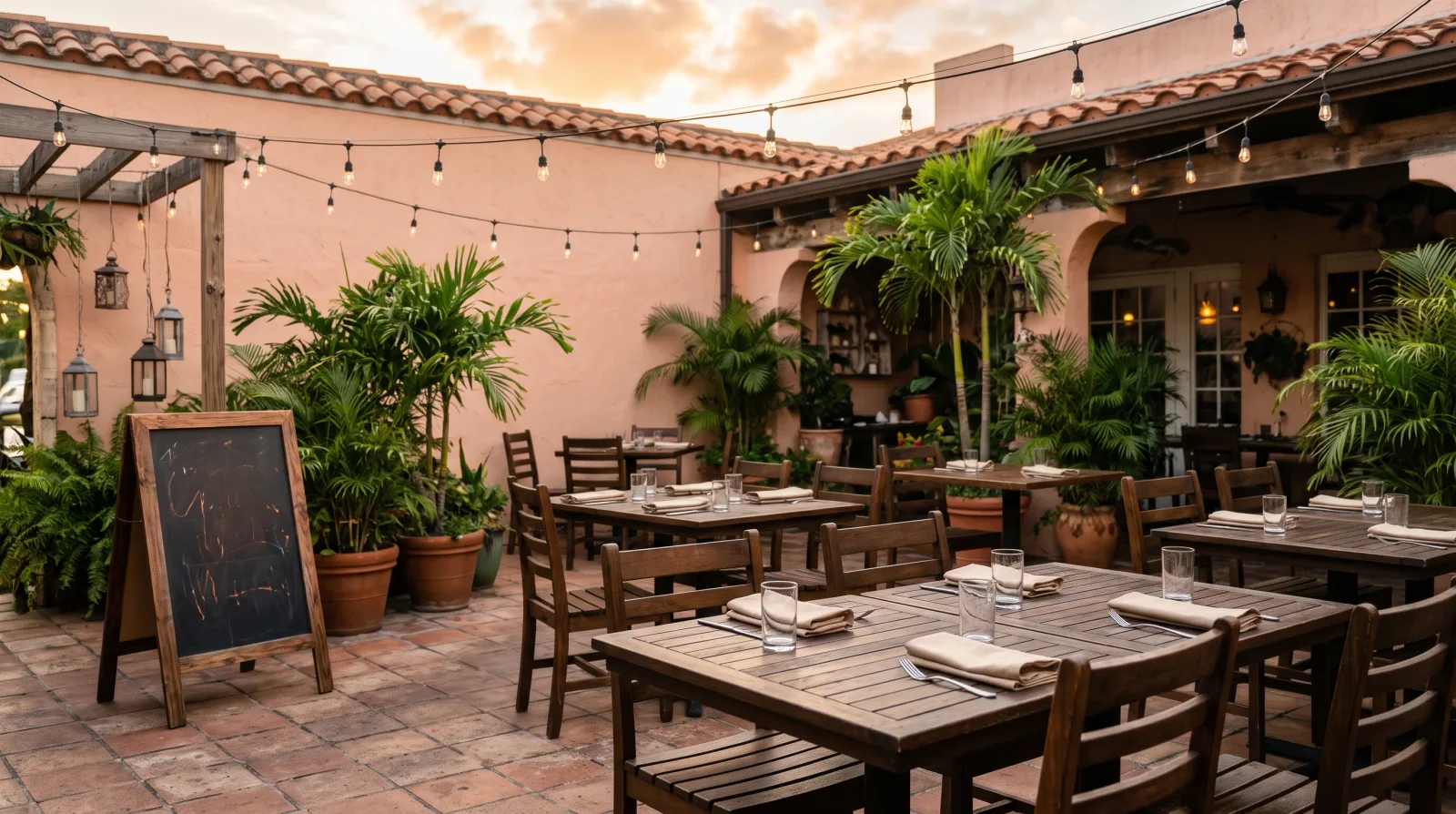 The room a guest imagines before they ever walk in.
Build a reason to choose you before the menu opens
People do not only choose a restaurant based on food. They choose an occasion. They want a quick counter lunch, a familiar Friday routine, a quiet place to celebrate, a meal after a game, or a reliable answer to “where should we go?”
Your marketing should make that context obvious. Pick the truth that already makes the restaurant distinct, then show it repeatedly without turning it into a slogan nobody believes.
That might be:
- the chef and the kitchen's approach to a particular cuisine;
- a family-owned place where regulars know the staff;
- a room built for birthdays and groups;
- a fast, dependable lunch for nearby workers;
- a bar and small-plate experience that belongs to the neighborhood; or
- a catering operation that takes pressure off the person planning the event.
A brand story film can help here, but it is not the strategy. It is one piece of proof. It can show the owner explaining why the place exists, the prep that happens before service, and the people a first-time guest will meet. Then the site, listing, reviews, and front-of-house experience have to carry the same promise.
Do not invent a polished identity that the shift cannot deliver. If your strength is generous portions, warm service, and a room where families stay awhile, show that. If your strength is speed and a sharp lunch menu, make ordering and pickup equally sharp. The best message is the one your team can prove on a busy night.
Reviews are the public version of your guest experience
A restaurant cannot write its own credibility. Diners look at reviews because they want to know what happens when the owner is not narrating the story.
The useful response is not to chase a magic review count or pressure guests for praise. Build a simple habit for asking after a genuinely good interaction. A server can mention it when a guest volunteers appreciation. A manager can follow up after a catered event. A receipt or thank-you message can give a direct route to leave honest feedback.
The request should be easy and optional. Do not offer a reward for a positive review. Do not tell people what rating to leave. Do not use a review request to paper over a service problem that needs fixing in the dining room.
Then respond like a real operator. Thank people for specific compliments. For a complaint, acknowledge the experience, avoid arguing in public, and move the detailed resolution offline where appropriate. A calm response is not just customer service; future guests read it as evidence of how you run the place.
For the mechanics, how to get more Google reviews lays out a straightforward approach that avoids making the ask awkward. The important restaurant-specific part is timing: asking immediately after a good meal or successful event is more natural than sending a vague blast to everyone months later.
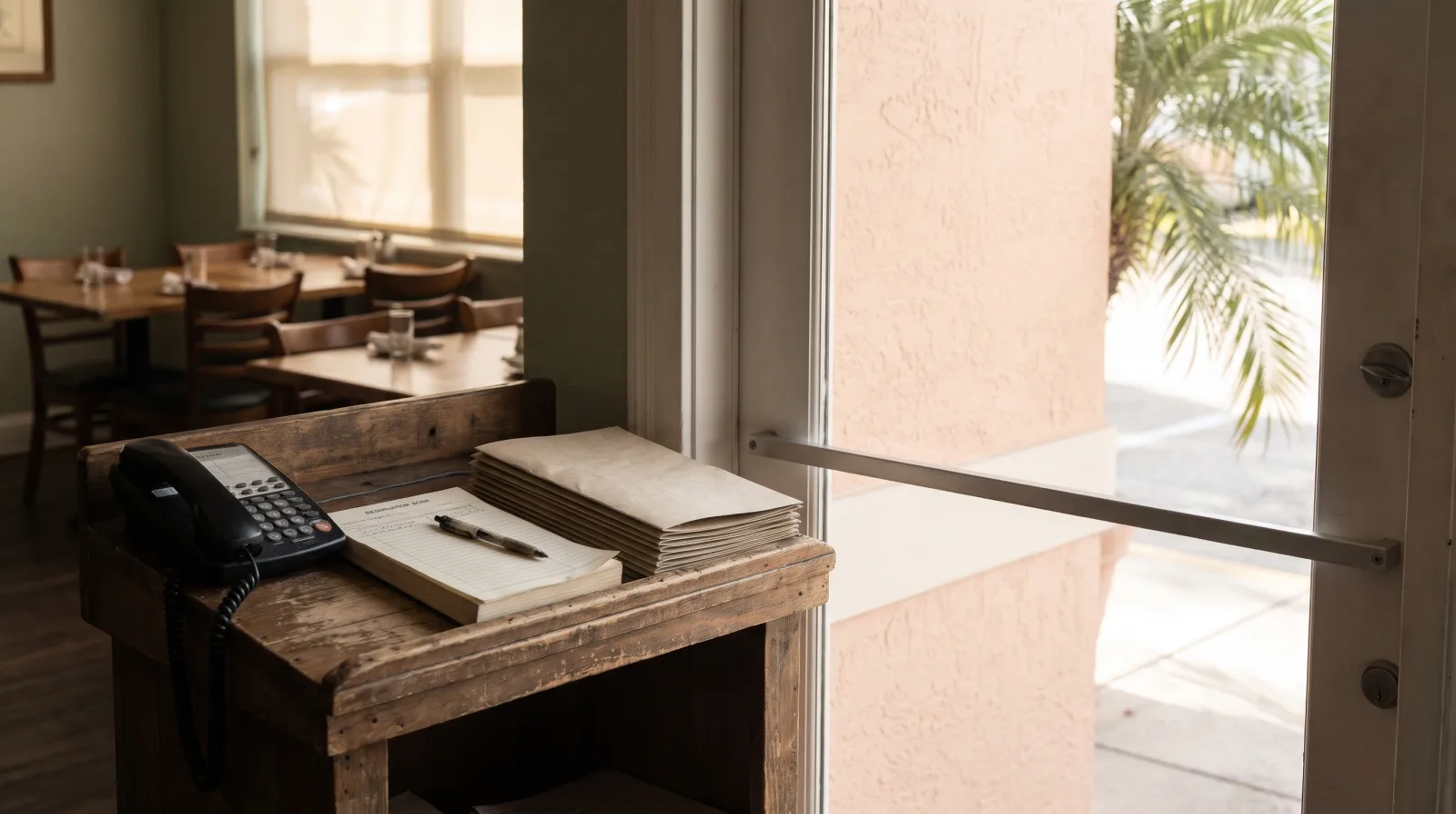 The phone at the host stand is part of the marketing too.
Calls, texts, and messages are part of the dining room
Restaurant owners often think of marketing as the work done before a guest arrives. The phone line proves otherwise.
A missed call may be someone asking whether you can seat six people, whether a dish can meet a dietary preference, whether the patio is open, or whether you can handle a catering order. It may be an order issue that can still be saved. During a rush, nobody can answer every call. The mistake is having no plan for what happens next.
First, listen to the kinds of questions that repeat. Put the answers where guests can find them before calling: menus, hours, parking notes, reservation rules, pickup instructions, and catering details. Next, give the team a short process for returning calls and messages. If you use a missed-call text-back workflow, keep it practical: identify the restaurant, offer a direct next step, and do not pretend a text resolves a complicated concern.
Messages must also respect consent and the rules that apply to your tools and location. A guest who gave you a phone number for a reservation did not automatically ask for a stream of promotional texts. Keep operational communication clear, and get appropriate permission for marketing messages.
Fast follow-up is not a flashy campaign. It is what stops interest from turning into a bad first impression.
Make repeat visits easier than the first visit
The most expensive customer is the one you work hard to attract and then give no reason to remember. Repeat business is not created by a generic “come back soon” post. It comes from doing the basics well enough that guests choose you again when the same occasion returns.
Notice what a repeat guest actually values. It might be knowing their order will be correct, seeing familiar staff, finding the same menu information, or being recognized when they call about a group dinner. A neighborhood restaurant may earn return visits through events, seasonal menu changes, or a simple email update that is actually useful. A lunch spot may earn them through consistency and speed.
This is where restaurant marketing meets operations. If a new diner arrives through a local search, has a good visit, finds it easy to leave feedback, and gets a clear answer when they later call about catering, the path holds together. If every step feels unrelated, each visit has to start from zero.
Auto repair marketing looks at the same principle in a different local business: the urgent first interaction matters, but the system should earn the second one. Restaurants have more chances to build that habit. Use them.
Audit the path once a month
You do not need a new campaign every month. You need to find the weak handoff before it costs another guest.
Have someone act like a first-time diner. Search for the restaurant on a phone. Check the Google listing. Try to see the menu, hours, parking information, ordering route, and reservation option. Call during a busy period and see what happens. Read recent reviews for recurring confusion. Look at the site from the perspective of a person planning a birthday dinner versus someone looking for a quick pickup order.
Write down the friction, assign an owner, and fix the basic issue before making more posts. A beautiful reel cannot compensate for a broken menu link. A packed dining room does not excuse unanswered catering inquiries. Marketing works when it reflects an operation that is easy to choose.
— Creatively Grow, Tampa Bay, FL
Common questions
- What is the most important part of restaurant marketing?
- Make choosing your restaurant easy at the moment someone is hungry or making plans. Your Google Business Profile, menu, hours, current photos, reviews, directions, and phone response should all tell the same clear story. A social post cannot repair missing or confusing basics.
- Should a restaurant focus on social media or Google first?
- Start with Google if the basics are not dependable. People use it to check hours, directions, the menu, reviews, and whether you are open right now. Social can create familiarity, but it works better when the person who searches for you afterward finds an accurate, convincing listing.
- How can restaurants get more reviews without bothering customers?
- Ask at a natural point after a good visit, then make the next step simple. Train the team on a consistent, no-pressure request and use a direct review link where appropriate. Do not script a positive review or offer an incentive in exchange for one.
- Why do missed calls matter for restaurant marketing?
- A missed call may be a reservation question, a catering request, an order problem, or a guest trying to confirm hours. If it gets no response, the guest usually chooses another option. A clear voicemail, quick callback process, and sensible text-back workflow protect those conversations.